The World Bank - Working for a world free of poverty

Languages

Views menu

Syndicate content

The 7 Habits of Highly Effective Cities


  1. Number SevenBe Proactive. There’s much any city can do today. Even without sufficient budget or authorization from ‘senior levels’ of government, every city has a full menu of things that can be carried out immediately, generating positive momentum and goodwill. Business rewards the active entrepreneur, and the public desperately wants active cities. The rewards are great.
     

  2. Plan – Plan Right. All cities carry out master plans for their key services, long-term infrastructure needs, and land use planning. Before starting these plans, the end needs to be clear. They are guidance documents, aspirational, and ways to rally supporters and give fair hearing to opponents. But a plan, no matter how good, can never be seen as a finished product. Before starting the plan an agreement is needed that the city is moving forward on this issue: the plan is the vehicle to bring along as many supporters as possible and identify potential potholes and trouble en route. Like a city, good plans are living documents. 

Providing Clean Drinking Water for Cities in Turkey

Across the world, countries facing rapid, and often unplanned, urbanization deal with a number of challenges that affect their growing populations. The issues range from a lack of access to decent housing and basic services such as sanitation, water, healthcare, electricity and transport. This has adverse impacts on the quality of urban living. It also undermines the efforts of cities to achieve their full economic potential.

Building Resilience for the Urban Poor - Let’s Get Moving

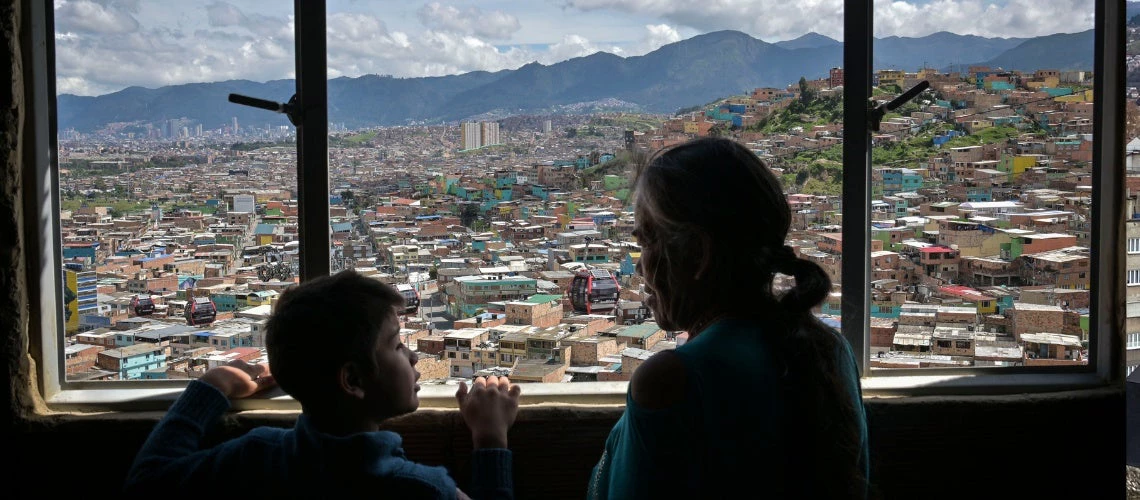
In the many slums I have visited in Latin America, Asia and Africa, I am always struck by the resourcefulness and resilience of residents. Slum dwellers face many hardships in their daily life – low incomes, overcrowded living conditions in high risk areas such as flood zones or steep hillsides, and limited access to clean water, sanitation, transport or solid waste services.


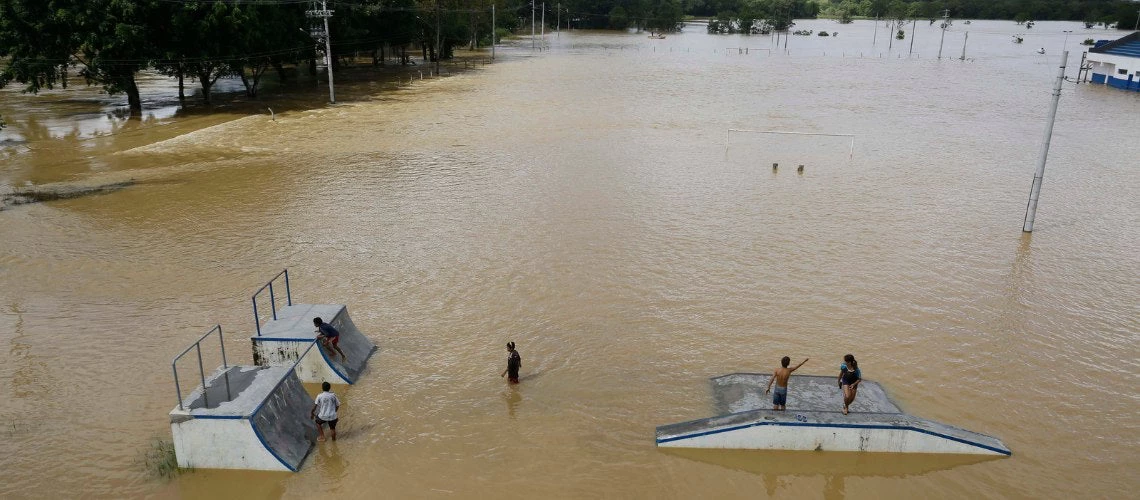
These challenges are only made worse by the impacts of climate change and natural hazards. Heavy rains can quickly turn into a disastrous flood as a result of insufficient or ineffective drainage.  Such flooding can destroy the limited assets of poor households, halt economic activity, contaminate water supply, lead to disease and displace residents.   With the increase in weather extremes, it is anticipated that such events will happen with recurring frequency.

UN Environment Programme, UN Habitat, World Bank Recognize New Global Protocol for Urban GHG Emissions, Encourage its Use

In March this year, we posted a blog on the draft edition of a global protocol for city-scale GHG emissions, announced jointly by ICLEI – Local Governments for Sustainability, C40, and the World Resources Institute (WRI).

Yesterday, a pilot version of the protocol was released at the UNFCCC climate meetings in Bonn, Germany. And today, UNEP, UN-Habitat and the World Bank expressed appreciation to ICLEI – Local Governments for Sustainability, C40, and WRI for this accomplishment. To learn more about the significance of the protocol, read this news feature.

Detroit: A Biography

Detroit: A Biography by Scott Martelle provides a unique glimpse into the life and history of one of America’s used-to-be, and maybe-again, great cities. From the outset you can tell that Mr. Martelle is more than an observant journalist; he’s a native. He’s got skin in the game.


Providing a biography of Detroit is a clever way to help the reader understand the nuances of what brought the city to where it is today. But the book reads more as an obituary than a city-in-progress biography. The closing Epilogue claims, “There is no real answer to the troubles afflicting places like Detroit”.

Guns Don’t Kill People: Nor do Cities Generate 70% of the World’s GHG Emissions

Sooner or later, anyone living in the US will hear a gun rights advocate say that ‘guns don’t kill people, people do.’ Semantics, but true. While we’re on semantics, strictly speaking, cities are not responsible for GHG emissions. Rather the people, or more specifically, those earning the most money, almost all of whom live in cities, are responsible for the vast majority of the world’s GHG emissions. But that is not nearly as easy to communicate, and messaging is important.


car exhaustOn cities and GHG emissions, what is the message we really need to communicate? First, it’s true, if you add up all the GHG emissions – direct (e.g., out the back end of our car) and indirect (e.g., the trees cut down for pasture or the belches from the cattle used in our hamburgers) – residents of cities are responsible for more than 70% of the world’s GHG emissions (and likely more than 80%). This should not be much of a surprise, as these same people are responsible for more than 80% of the world’s economy. GHG emissions are a by-product of the stuff we buy and do.

Collaborative consumption – a trend for the young, the hip, the urban

Moving from California to Washington DC, I did not expect to find revolution; but I have. Fellow city-dwellers are overthrowing old models of consumption (through which their cities became extractors and importers of natural resources and exporters of waste products) by simply changing their habits. One by one, urban citizens are choosing collaborative consumption instead, to save money, resources, and time.


Though sharing is not new – in fact, historically, people lived and consumed resources in groups – it is an innovation in the modern city. A diverse set of sharing mechanisms has sprouted – for-profit, non-profit, informal, and formal – many of which use the web to match supply and demand.


Instead of purchasing cars, consumers are using car-sharing companies (like Zipcar), which allow them to rent vehicles by the hour, or stopping by to get a ride from the Casual Carpool in San Francisco or the Slug Line in Washington DC, two informal, citizen-organized carpool sites that match car-free commuters with drivers looking to enter High Occupancy Vehicle (HOV) lanes and save on toll fares.

Baseball and the City: Happy 100th Birthday to Boston's Fenway Park!

Fenway Park, Boston, USAs a graduate student in Cambridge, Massachusetts living outside my home country Philippines for the first time, attending Boston Red Sox games at Fenway Park marked the beginning of my initiation into American life — and that most American of pastimes: baseball. Fenway Park (the country’s oldest ballpark) turned 100 years old last Friday (April 27, 2012). It is a wonderful icon of the enduring nature and magnetic power of cities.


Fenway Park (like the city of Boston) is small, expensive, and still has infrastructure from 1912. The bathrooms, parking, and other amenities don't always work (again, like many great cities). But overall, this urban gem is the best place to watch a baseball game — despite the 86-year drought in World Series championships.

Using GIS to Manage the Urban Ecosystem

Growing up on a farm meant I spent very little time in cities. I felt more at home when surrounded by green than grey. As a kid, I saw cities as noisy, bright, busy and quite frankly, confusing. I always thought to myself why would anyone want to live in them? However, when I grew up, I moved to a city to take advantage of the opportunities it provided. I am not alone. More than 50 percent of the world’s population lives in cities and this number will rise. Cities are hubs of productivity, innovation and vast human capital; but once you live in them you begin to see that they are like any other ecosystem: complex and fragile, whose balance can be easily disturbed. With many cities rapidly growing and evolving, how do you manage this increasing complexity without destroying the ecosystem?


GIS Image.  Source - University of Texas at DallasGeographical Information System (GIS) techniques have proven successful in mapping, analyzing and managing natural ecosystems. It is now time to make use of the same technology to manage, model and design our expanding global system of cities. GIS consists of a proven set of tools that can provide information to leaders at the local and national level to facilitate evidence-driven decision making. It allows us to move beyond 2D paper maps and incorporate everything that lies below, above and around a city to create a 3D digital representation of the city’s ecosystem. By integrating this information into the planning process, it will hopefully lead to harmonized planning across sectors. For example, integrated transport and land use planning and development will allow for economic, social and environmental benefits. More sectors can then be incorporated, with this integration not only happening within the city limits but including the urban periphery, where a lot of urban expansion is currently occurring. This holistic view will allow planners to make cities more livable.

The Top Three Reasons Rio+20 Will Change the World

Rio +20 LogoThough two months away, the UN Conference on Sustainable Development’s Earth Summit, better known as Rio+20, has already been labeled vital, momentous and historic. And while delegates, students and activists have yet to arrive in Brazil, we already know that Rio+20 has the potential to be a “big deal.” It all begs the question, can the people engaging in Rio+20, in-person or remotely, really change the world? My sage and inspiration for answering this question is Margaret Mead who said, “Never doubt that a small group of thoughtful, committed citizens can change the world. Indeed, it is the only thing that ever has.”


Simply, Rio+20 is about being part of that thoughtful group committed to "getting it right" for future generations. The outcome and commitments of the Conference will affect us all, from the farmer in Iowa to the IT specialist in India, and whether you attend the conference or not, your voice can and needs to be heard.