Just three years ago, Chennai’s commuters were moving away from public buses, and its transport authority was grappling with falling ridership, a shrinking fleet, and eroding public trust.
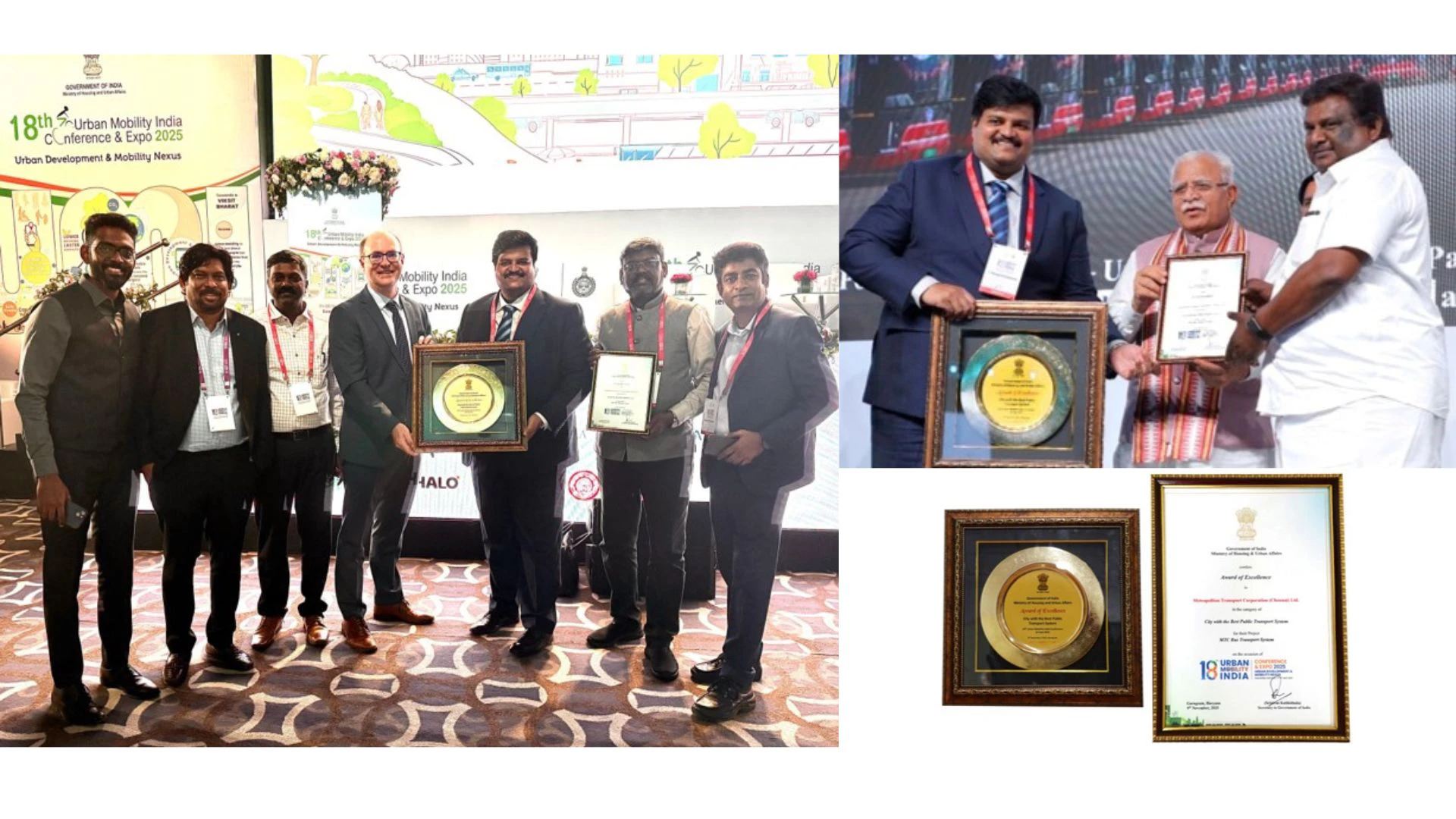
Today, Chennai has not only turned the situation around but has also won India’s top urban transport award from the Minister of Housing and Urban Affairs – the "City with the Best Public Transport System". This is an accolade Chennai can be justly proud of.
The transformation wasn't accidental. The city had the vision to reimagine public transport and the courage to challenge the status quo.
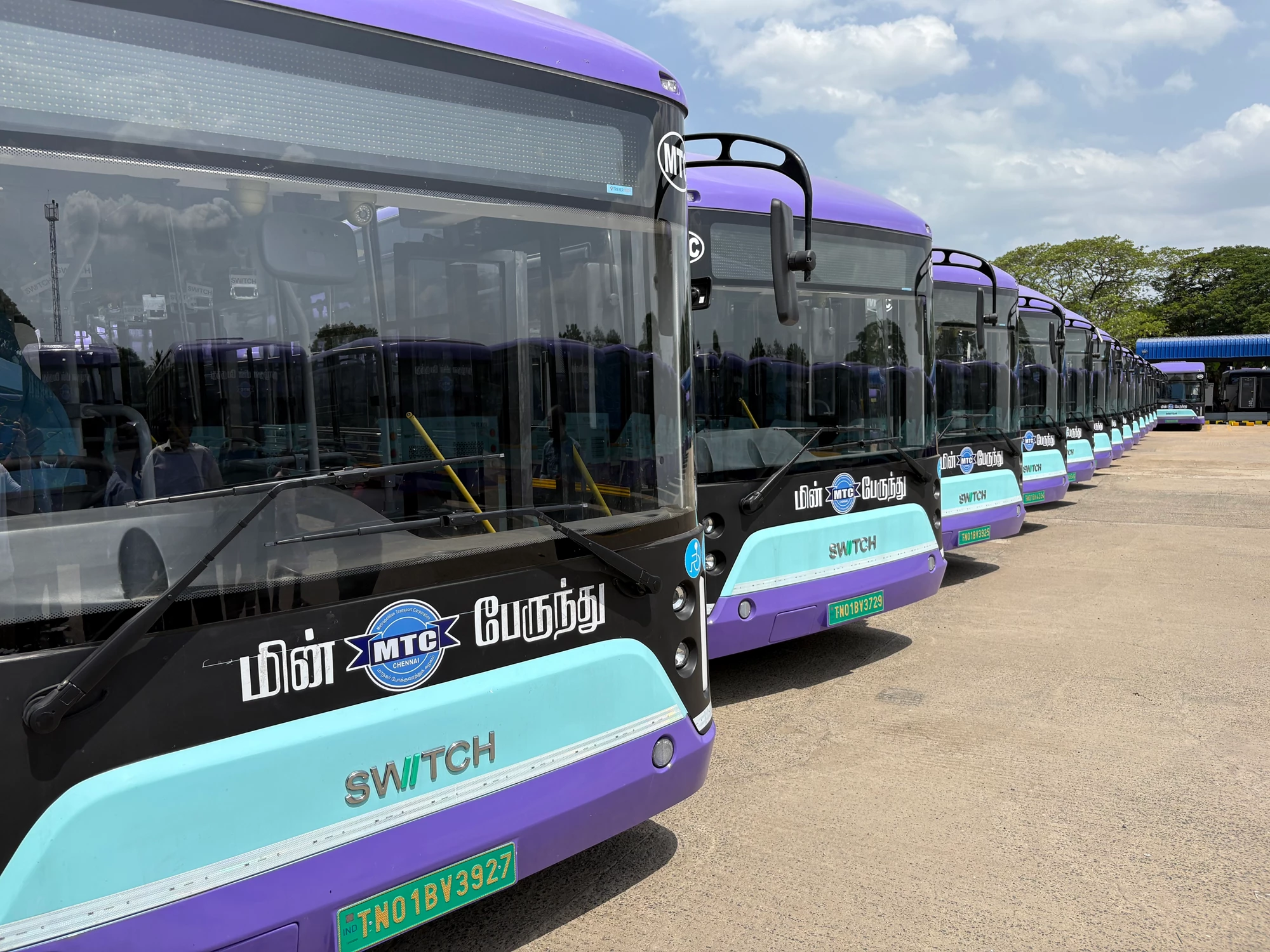
Importantly, it attracted private investment, helping to transform the Metropolitan Transport Corporation (MTC) from a state-owned operator waiting for bailouts into a performance-driven service provider. MTC now carries 3.5 million passengers daily, tracks customer satisfaction, and MTC is in the process of deploying more than 1,000 privately financed electric buses.
A Playbook for Other Indian Cities
Chennai, the capital of Tamil Nadu, provides a playbook that India’s cities can follow as they grapple with congestion, air pollution and fiscal constraints, while balancing social inclusion, climate ambition, and financial prudence.
It all began in 2022 when the city followed a deliberate three-stage blueprint—Plan, Contract, Leverage Private Sector Partners—embedded in the Chennai City Partnership Program for Results, supported by the World Bank Group (WBG) and the Asian Infrastructure Investment Bank (AIIB). The approach built on the WBG’s national-level advisory work that helped create a bankable market for electric buses through structured contracts.
Start with a bold vision and a business plan
In 2021, the Government of Tamil Nadu (GoTN) asked a simple but powerful question: What will it take for MTC to matter to everyone in Chennai, every day? The answer: a 10-year Business Plan launched in July 2023 that reset ambition:
- Double the fleet from 3,450 to 7,500 buses by 2032 (two-thirds electric),
- Lift daily boardings from 2.8 million to 5.3 million, and
- Track customer satisfaction through annual surveys and open data.
This plan became the north star for reforms and was embedded in Chennai’s revised multimodal Comprehensive Mobility Plan (November 2025). It created a common language for government, MTC, financiers, and citizens—essential for attracting private investment.
Hardwire accountability through contracts
Ambition without predictable funding sinks reforms. Chennai avoided that trap by signing India’s first Public Transport Service Contract (PTSC) in October 2023—a five-year rolling agreement with performance-linked Viability Gap Funding (VGF) replacing ad-hoc subsidies. VGF is a government payment to support service delivery that is economically or socially necessary but not financially attractive enough to secure private investment alone.
Key features:
- Predictable VGF: Multi-year funding covers the gap between affordable fares and full costs.
- Performance incentives: 10 percent of VGF is tied to seven Key Performance Indicators (KPI) such as on-time dispatch, breakdowns, and customer satisfaction. These KPIs have become a new yardstick by which MTC staff assess and adjust their performance.
- Proactive governance: A Contract Management Committee reviews KPI performance and make necessary amendments to PTSC including fleet coverage, KPI targets, and VGF mechanisms.
The PTSC began with 10 percent fleet coverage but scaled to 70 percent by Year 3—mainstreaming a “manage for results” culture. It transformed MTC from a bailout-dependent operator into a performance-driven service provider—without the political upheaval of privatization.
Unlock scale through private capital
With direction and operational funding secured, Chennai tackled its biggest challenge: increasing the number of buses in an affordable manner. The solution: Gross Cost Contracts (GCC) that shift capital responsibility to private operators while retaining public control over service design and fares. Under GCC, private operators finance, procure, operate, and maintain buses, earning fixed per-km payments, while MTC retains fare policy and revenue collection—protecting affordability and social programs like free travel for women.
Results:
- $150 million in private capital mobilized under those contracts —one of South Asia’s largest urban e-bus procurements.
- 18–20 percent lower costs than in-house operations, locking in $620 million savings over 12 years, which can be reinvested in service expansion and passenger amenities.
- Procurement of 1,025 electric buses and associated services awarded through competitive bidding.
What made this possible? GoTN adopted a bankable concession model, backed by payment security and predictable VGF flows under PTSC—giving investors confidence in a sector long deemed “unbankable”.
Early Wins for People and Planet
Even before full fleet rollout, benefits are visible:
- Social impact: Free travel for women (since May 2021) boosts workforce participation at minimal cost. School bus services save families ₹2,000/month. Fare concessions support the elderly and disabled. This matters because 53 percent of trips are job-related and 22 percent are education related.
- Digital transformation: 100 percent e-ticketing, GPS tracking, and the “Chennai One” app provide real-time information and ticketing.
- Environmental leadership: 255 e-buses are already operational, with 260 more by year-end. The fleet is on track to be 66 percent electric by 2032, cutting air pollution and GHG emissions.
Lessons for Cities Everywhere
- Sequence matters: Plan first, secure financial sustainability, then attract private capital.
- Contracts create culture: Performance-linked funding changes incentives without privatization.
- Private capital follows clarity: Investors need clear risk allocation, payment security, and enforceable KPIs.
- Equity and efficiency can coexist: Smart VGF protects social fares while GCC delivers cost savings.
- Anchor reforms in multimodal vision: Buses complement metro and rail; Chennai is revamping routes for last-mile connectivity.
For more: See the Chennai Compendium and the Gender responsive Urban mobility Toolkit.

Join the Conversation