
This is the 17th in this year’s series of posts by PhD students on the job market.
Each winter, smoke blankets North India as thousands of farmers set their fields on fire to clear rice residue before planting wheat. This practice accounts for more than 40% of peak winter air pollution in the region, contributing to severe respiratory illness and tens of thousands of premature deaths annually. Despite substantial attention from policymakers, the practice persists. Farmers face a narrow window of two to three weeks to manage residue between the rice and wheat seasons. These challenges are compounded by limited access to and low awareness about sustainable alternatives. Whether policies designed to alleviate these constraints can meaningfully reduce burning, and which combinations of interventions are most effective, remain open questions.
In my job market paper, I tackle this question through a large, pre-registered field experiment with 1,000 farmers in Punjab, designed to relax both the time and knowledge constraints that drive burning. The intervention was simple: subsidize "early-maturity variety" (EMV) rice seeds that grow 20-25 days faster than traditional varieties. These shorter plants also produce less crop residue, making it easier to manage without burning. Because farmers face both time and knowledge constraints, a subset of farmers also received hands-on training in sustainable residue management methods, allowing me to test whether pairing financial support with targeted information could further reduce burning.
Experiment Design
Farmers were randomly assigned to one of three groups:
- Seed Subsidy Only: Farmers received a 50% subsidy (₹225 or about $2.60 per acre) for EMV rice seeds, up to 10 acres. The subsidy was conditional on verified adoption.
- Seed Subsidy and Training: In addition to the subsidy, farmers received two rounds of in-person training (before and after harvest) on sustainable residue management techniques such as mulching, composting, and baling. Pre-harvest session focused on best practices for EMV cultivation, cost and time comparisons of alternative residue management methods, and local options for residue management machinery. Post-harvest session addressed issues such as weeds and pests that arise under no-burn conditions.
- Control Group: No intervention.
Enumerators conducted unannounced visits to each geo-coded plot every two to three days during the harvest months (October–November), recording visible signs of burning to ensure that no event was missed. In addition to the binary measure of burning (the extensive margin), enumerators recorded the intensity of burning (the intensive margin), distinguishing between partial burning, in which only the upper residue was burned, and full burning, in which both the upper residue and basal stalk were burned. This distinction is important: shifting from full to partial burning can substantially reduce emissions even if burning is not entirely eliminated.
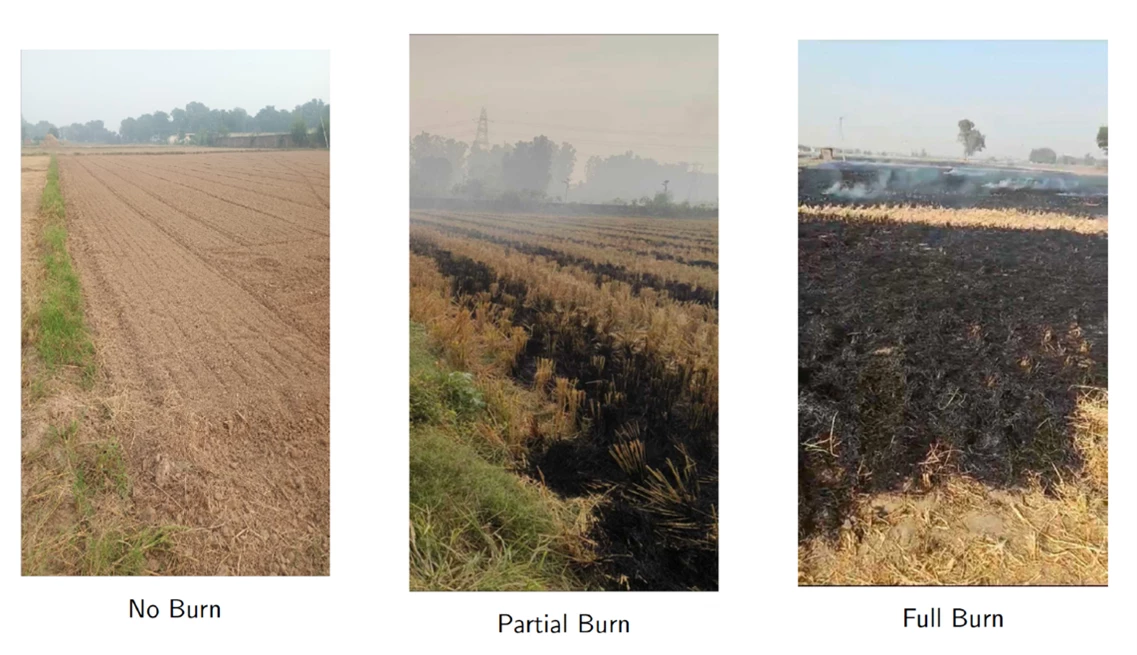
Figure 1: Burning of Crop Residue Compared to No-Burning
The Results: Significant Reductions in Burning
Both treatment groups—the seed subsidy only and the seed subsidy-plus-training—reduced residue burning, with the training arm exhibiting larger effects. In both treatment groups, the reduction came mainly from less full burning rather than less partial burning.
Control farmers partially burned about 3 acres on average, and while both treatments reduced partial burning, these effects were small and imprecisely estimated: a 0.1-acre reduction in the Seed Subsidy Only group and 0.7-acre reduction in the Seed Subsidy and Training group. By contrast, the declines in full burning were larger. Relative to a control mean of 3.13 acres, the Seed Subsidy Only group reduced full burning by roughly 1 acre, and the Seed Subsidy and Training arm reduced it by about 1.5 acres. These effects are statistically indistinguishable but consistently point in the same direction: training amplifies the impact of subsidies.
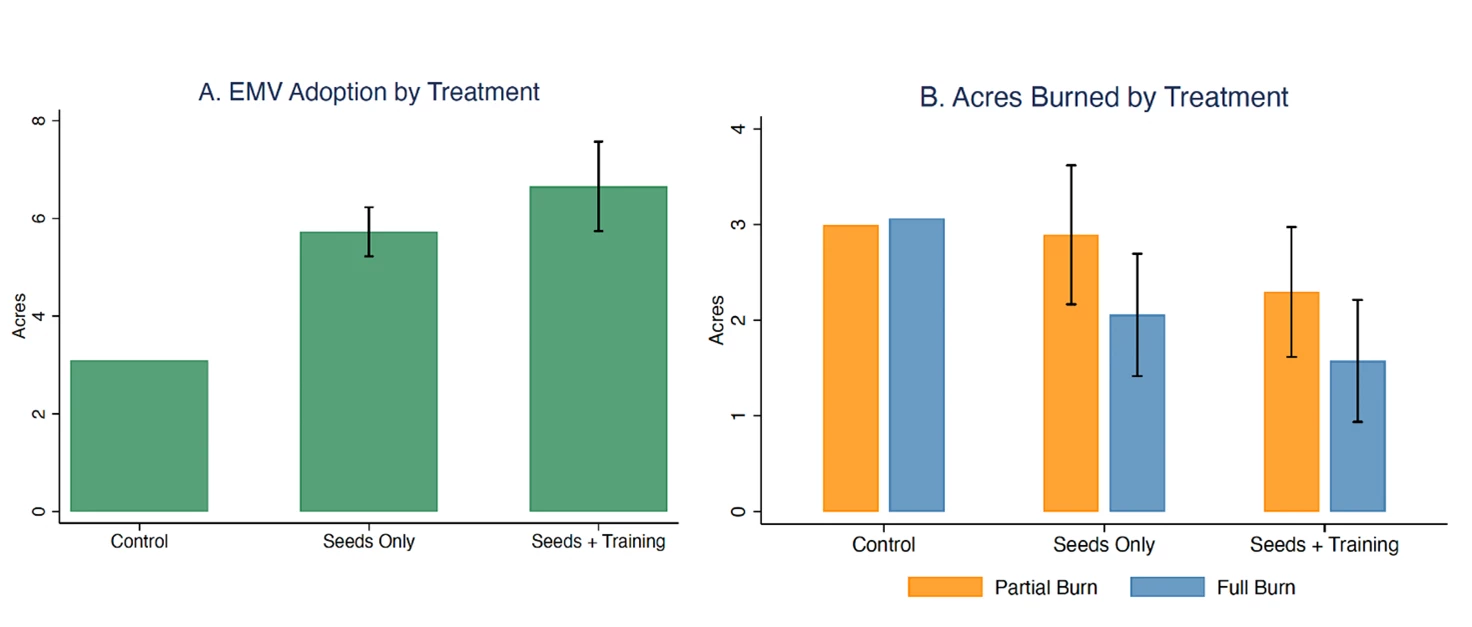
Figure 2: Treatment Effects on Adoption of EMV Seeds and Crop Residue Burning
Why It Works: Time, Volume, and Knowledge
The interventions succeeded through three complementary channels. First, EMV seeds mature faster, giving farmers an extra 3-4 weeks between harvest and planting. Relative to a control mean of 3.1 acres under EMV cultivation, the Seed Subsidy Only treatment increased EMV area by 2.6 acres, while the Seed Subsidy and Training treatment raised it by 3.6 acres—a statistically larger effect. Consistent with this, treated farmers were 8–10 percentage points less likely to report facing time constraints compared to the control group.
Second, EMV plants are shorter and produce less residue per acre, making alternatives to burning (such as soil incorporation, baling or mulching) more feasible. Treated farmers significantly increased their use of these sustainable alternatives.
Third, training reduced barriers to machinery access: farmers in the Seed Subsidy and Training group were 12 percentage points less likely to report delays in renting residue management equipment, while the Seed Subsidy Only group showed no difference relative to the control group. Interestingly, the treated farmers—including those who received only the subsidy without training—reported significant improvements in their knowledge and skills in sustainable residue management, suggesting that EMV adoption itself acts as a learning trigger.
The Bottom Line: Massive Benefits at Minimal Cost
The interventions proved highly cost-effective in reducing burning and emissions:
- Each $1 spent generated $32.28 in social benefits (from avoided greenhouse gas damages) in the Seed Subsidy Only arm and $28.35 in the Seed Subsidy and Training arm.
- The health benefits of preventing one acre of burning are about 400-460 times larger than the cost of achieving that reduction.
I benchmark these results against a Payments for Ecosystem Services (PES) program evaluated by Jack et al. (2025) in the same region, which offered conditional transfers for verified non-burning. I find that relative to PES, the interventions I test achieve an additional unburned acre at 53-60% lower cost.
Policy Implications: A Path Forward
In 2024, Punjab cultivated about 8 million acres of paddy, burning around 5 million acres. Scaling up the Seed Subsidy Only program state-wide could prevent about 0.73 million acres of burning, while the Seed Subsidy + Training approach could avert 1.27 million acres, cutting emissions by 3.5–6 million tons of CO₂ — all at an annual cost of $13–23 million, or less than 2% of Punjab’s agricultural budget.
The Government of Punjab has already begun promoting EMV seeds, but adoption remains far from universal. My results suggest that small, well-targeted subsidies combined with practical training could significantly accelerate this transition. Moreover, because the cost-effectiveness would likely improve under large-scale implementation (through economies of scale and reduced research costs), there's a strong case for expanding these programs across India's rice-wheat belt. Empowering farmers to manage residue responsibly doesn’t just clear the skies—it clears the path toward a cleaner, healthier, and more resilient rural economy.
Piyush Gandhi is a PhD student at University of California, Santa Cruz

Join the Conversation