
This is the 17th in this year’s series of posts by PhD students on the job market.
In many rural parts of Sub-Saharan Africa and South America, families live along rivers that shimmer with both gold dust and mercury. Artisanal and small-scale gold mining (locally called galamsey in Ghana) offers quick income, but leaves behind poisoned soil, contaminated fish, and invisible health risks that accumulate across generations. State crackdowns have come and gone, yet environmental damage continues.
But there are exceptions. In Jema, a community in Ghana’s Western Region, the traditional chief and residents jointly adopted a community regulation, in the form of a customary bylaw, which bans galamsey and introduced regular assemblies to monitor compliance. Their experience shows what coordinated local action can achieve, but such examples of community collective responses remain rare. Why do most communities struggle to organize in the same way? My job market paper investigates whether providing more accessible health information, delivered through a documentary film, helps close that gap.
The problem: Hidden harms and misaligned incentives
Artisanal and small-scale gold mining (ASGM) employs an estimated 14–19 million miners across 80 countries and is the world’s largest source of mercury emissions. In Sub-Saharan Africa and South America, ASGM alone accounts for over 80 percent of mercury releases. Chronic exposure causes neurological damage, kidney and liver disease, and birth defects, but these harms are hard to see and even harder to link to mining.
When I surveyed 1,586 households across Ghana’s Western Region, fewer than half connected galamsey to these long-term health conditions. Many attributed such illnesses to spiritual causes. Without a clear sense of danger, it is difficult for communities to mobilize against pollution, especially when the state’s enforcement capacity is limited.
Local leadership is also central to the story. Traditional chiefs control access to land and wield deep authority, but their incentives vary. Some chiefs champion environmental protection; others quietly profit from mining rents. This tension raises a simple but fundamental question: Should information about environmental harms be seeded through local leaders or broadcasted directly to the public?
The experiment: Leader vs. public screenings
To answer this, I worked with Ghanaian partners to design a cluster-randomized experiment in 99 galamsey-affected communities. The treatment assignment was stratified by whether each chief had a conflict of interest in mining.
The intervention centered on Poisoned for Gold, a 30-minute documentary by journalist Erastus Asare Donkor. The film, dubbed in Twi, shows physicians, scientists, and community members explaining how mercury exposure affects health, translating abstract environmental risks into vivid human consequences.
Communities were randomly assigned to one of three groups:
- Control: No screening
- Leader-only screening: The chief watched the film privately in the palace.
- Public screening: The same film was shown at the start of a town hall open to all residents, including the chief.
On the same day the information was delivered, we convened structured town halls in all 99 communities. These gatherings, locally known as Durbars, are a familiar forum for community deliberation, making it a familiar event for participants. Attendance averaged 48 community members per meeting. Each town hall followed a structured sequence: an open discussion, a secret-ballot vote on potential mining bylaws, and voluntary sign-ups for continued community meetings and an NGO-moderated WhatsApp group.
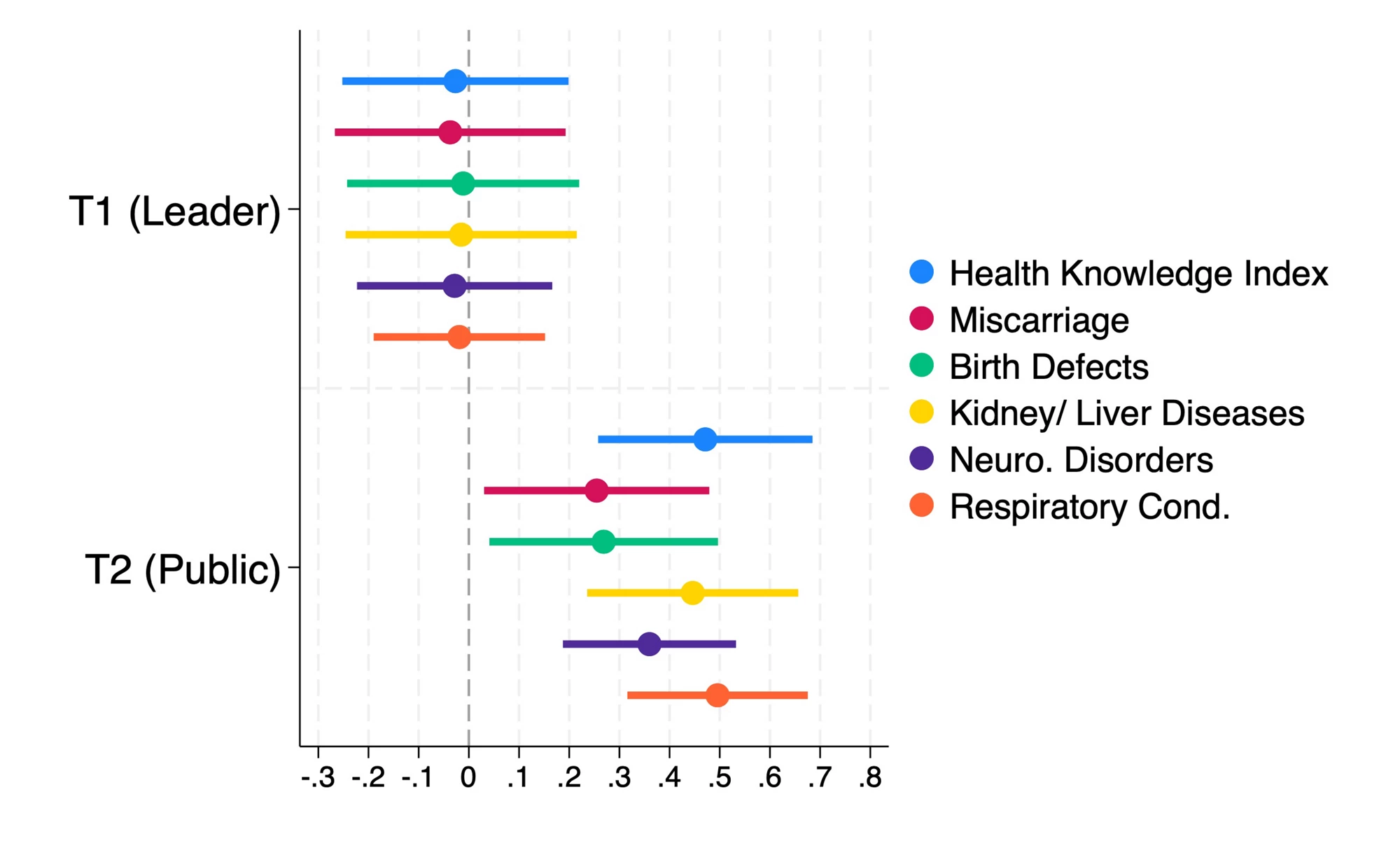
Figure 1. Only public screenings improved community learning
Three weeks after the town halls, we returned to conduct endline interviews and successfully re-interviewed 96 of the 99 baseline chiefs and 1,368 households (86.3 percent of the 1,586 baseline households). Chiefs in both leader-only and public screenings learned substantially: their knowledge of long-term health risks rose by roughly 0.5 standard deviations relative to control chiefs. For community members, however, leader-only screenings had no effect—health knowledge was indistinguishable from the control group (Figure 1). In contrast, public screenings boosted community learning by 0.5 standard deviations across multiple health conditions, from miscarriage to respiratory illness. Simply put, when information reached the public directly, people learned; when it stayed behind palace doors, they didn’t. In the full paper, I show that this gap persists even when chiefs attempt to relay the information, underscoring both the power of direct visual exposure and the limits of indirect communication through traditional authority.
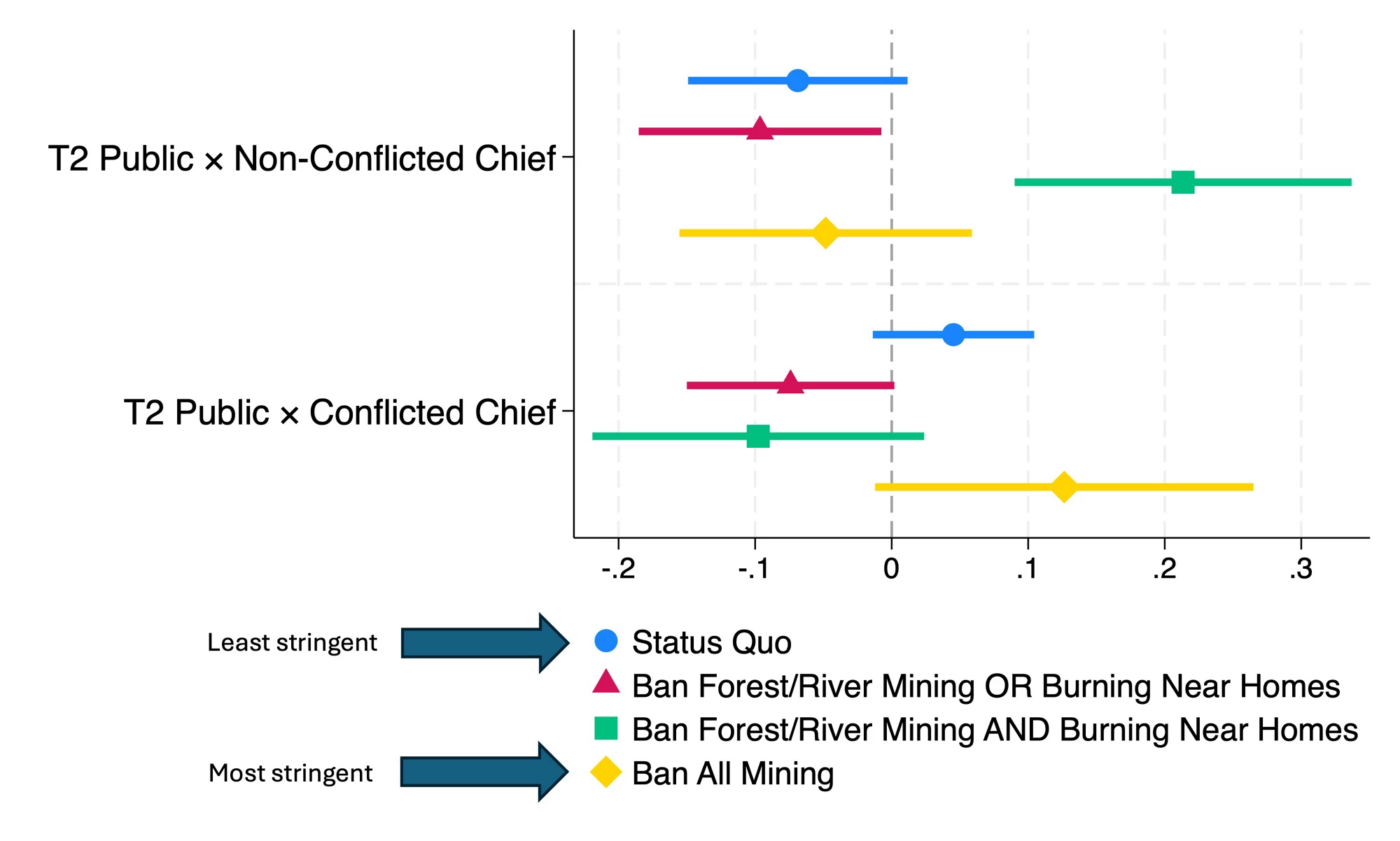
Figure 2. Public screenings changed regulatory preferences, contingent on leadership type
We digitized 4,588 anonymous ballots to track shifts in demand for community mining regulation. We find no change in preferences in the leader-only screening arm, consistent with the absence of learning among community members. By contrast, when information reached everyone, it began to shape collective choices, but in markedly different ways depending on the incentives of local leadership (Figure 2). In communities with non-conflicted chiefs, community members converged toward stricter environmental rules. The share supporting a bylaw that prohibits mining in forests, rivers, and amalgam burning near residential areas rose by 21 percentage points, indicating a strong consensus around one of the most stringent and actionable options. Under conflicted chiefs, however, the same public screening polarized preferences: more community members favored either maintaining the status quo or adopting a complete ban. Quantitatively, the average distance between an individual’s preferred regulation and the community mean increased by 19 percent, signaling polarization rather than agreement.
This pattern mirrors leaders’ own behavior. Relative to conflicted chiefs in control communities, conflicted chiefs in public-screening communities were 41 percentage points less likely to attend the town hall and 38 percentage points less likely to endorse a stringent mining bylaw. Neither pattern appears when they privately receive the information. These results, taken together, suggest that conflicted leaders seek to avoid accountability pressures created by public dissemination. These leader responses plausibly contributed to the polarization observed among constituents in the public-screening communities: some community members, empowered by their newly acquired knowledge, shifted toward stronger environmental action, while others were discouraged by the lack of buy-in from their chief.
Beyond votes: Sustained engagement and accountability
Like the results on regulatory preferences, the leader-only screening produced no consistent effects on sustained engagement. In contrast, public screenings clearly mobilized greater participation. Relative to control communities, we found:
- Volunteer sign-ups for regular community meetings rose by 0.4 standard deviations.
- Neighbors talked more about galamsey in the weeks that followed, a sign that the film brought the issue into everyday conversation.
- In communities with conflicted chiefs, enrollment in the NGO-moderated WhatsApp group jumped by 39 percent, suggesting that citizens sought alternative spaces to coordinate outside traditional authority.
In these conflicted-chief communities, public screenings also strengthened demands for accountability. Community members exposed to the public screening were 56 percent more likely than those in control communities to say that chiefs should be both respected and questioned rather than respected unconditionally. Chiefs themselves reported feeling greater pressure from their constituents. Thus, even when public information did not generate consensus on regulation, it increased both collective engagement and bottom-up accountability.
The bigger picture: Information and the “pessimism paradox”
Yet information alone isn’t a silver bullet. When people saw the full extent of mercury pollution, many became more pessimistic about their community’s ability to solve the problem. Respondents in public-screening communities were 11 percentage points less likely to view community action as more effective than government intervention. Awareness of harm, without clear pathways to fix it, can breed pessimism. The lesson is that knowledge must be coupled with agency. Showing the problem is not enough. Communities also need credible leaders and achievable next steps if information is to build and sustain, rather than erode, hope.
What this means for development policy
- Information can empower, but only when it reaches the public directly. In this context, visual media bridges technical gaps: scientific health risks like mercury exposure are difficult to convey verbally, but professionally produced local-language documentaries can translate them powerfully for community learning.
- Leadership incentives shape collective outcomes. Under aligned leadership, information fostered consensus and stricter regulation; under misaligned leadership, it fueled polarization.
- Pair “bad-news” information with actionable prescriptions. Awareness of harm can motivate accountability but also create pessimism if people lack viable solutions. Interventions that inform must also enable.
Chiman Cheung is a job market candidate at the University of California, Berkeley.

Join the Conversation