
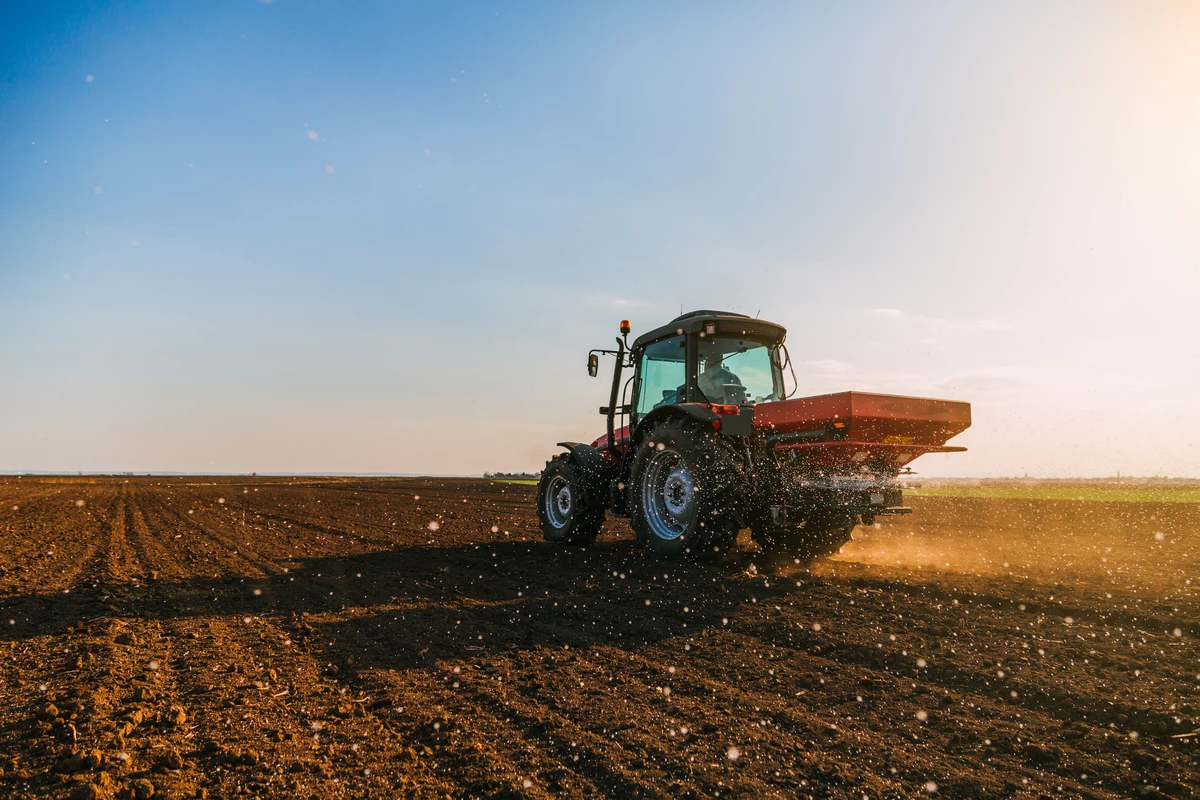
 Fertilizer prices eased in late 2025, but markets remain tight as rising input costs and ongoing trade restrictions continue to limit global supply. / Photo: Shutterstock
This blog post is part of a special series based on the October 2025 Commodity Markets Outlook, a flagship report published by the World Bank. This series features concise summaries of commodity-specific sections extracted from the report. Explore the full report here.
Fertilizer prices eased in October-November after surging nearly 14 percent in 2024Q3 (q/q). In November, diammonium phosphate (DAP) and triple superphosphate (TSP) fell by 6 percent and 3 percent respectively, while urea prices rose 4 percent (m/m). Despite the recent pullback, prices remain elevated—about 17 percent higher than a year earlier—reflecting higher input costs (especially for nitrogen), resilient consumption, and ongoing trade restrictions. The fertilizer price index is projected to rise more than 20 percent this year before moderating in 2026 and 2027 as new capacity comes online. However, it will remain well above the 2015-19 average. Key risks to the outlook include higher input costs and continued export constraints from China.
Despite easing fertilizer prices, affordability remains low. Although prices for urea, DAP, and MOP (muriate of potash) have softened recently, they still average about 20 percent above year-ago levels. Combined with weaker food commodity prices, these increases have squeezed farmers’ profit margins, particularly for fertilizer-intensive crops such as maize, wheat, and rice. Affordability indexes for all three fertilizers—the ratio of fertilizer to crop prices — remain elevated relative to the pre-2022 period. Moreover, while urea and MOP affordability indexes have fallen below their 2022 peaks, the DAP index remains well above its early-2022 high.
Some input costs have increased in recent months. Natural gas prices—a key input for nitrogen fertilizer production — fell by 22 percent in the United States and 26 percent in Europe (in U.S. dollar terms) in November compared with the start of the year. In contrast, liquid sulfur prices have nearly tripled since the end of 2024, and ammonia prices, after easing earlier in 2025, are now almost 15 percent higher. These increases have exerted upward pressure on some fertilizer prices.
Global fertilizer markets continue to be shaped by trade policies and sanctions. China’s export restrictions have sharply tightened nitrogen supplies, with 2024 exports dropping more than 90 percent year-on-year as the country prioritized domestic price stability and supply security. These measures continued through the first half of 2025, sustaining global market tightness, though urea exports picked up later in the year. Phosphate exports have also been constrained as China secures inputs for lithium-iron-phosphate batteries used in electric vehicles. Belarus, a major potash supplier, remains under EU sanctions. More recently, the EU imposed tariffs on agricultural imports — including nitrogen fertilizers — from Russia and Belarus, prompting these flows to be redirected to Asia and the Americas and raising fertilizer costs. These measures are expected to be fully phased in over the next two years.
The fertilizer price index is expected to ease in 2026 and 2027 after rising 20 percent this year. Urea prices are projected to jump 30 percent in 2025 amid tighter markets, then decline by 7 percent in 2026 and 9 percent in 2027 as new capacity comes online in East Asia and the Middle East. Upside risks include slower capacity additions, renewed trade restrictions, and higher natural gas prices. Over the longer term, nitrogen fertilizers face structural supply challenges due to their high carbon footprint, which could accelerate a shift toward lower-emission alternatives such as biofertilizers, organic amendments, and regenerative farming technologies. DAP prices are expected to rise 26 percent in 2025 before falling 8 percent in 2026 and again in 2027 as supply pressures ease; the forecast assumes Russia continues diverting exports from Europe to Brazil and India, though further restrictions, supply disruptions, or spikes in ammonia or gas prices could push prices higher. MOP prices are projected to increase 19 percent in 2025 on firm demand, followed by moderate declines in 2026 and 2027, with a key downside risk being faster-than-expected growth in Belarusian exports through alternative routes.


Join the Conversation