
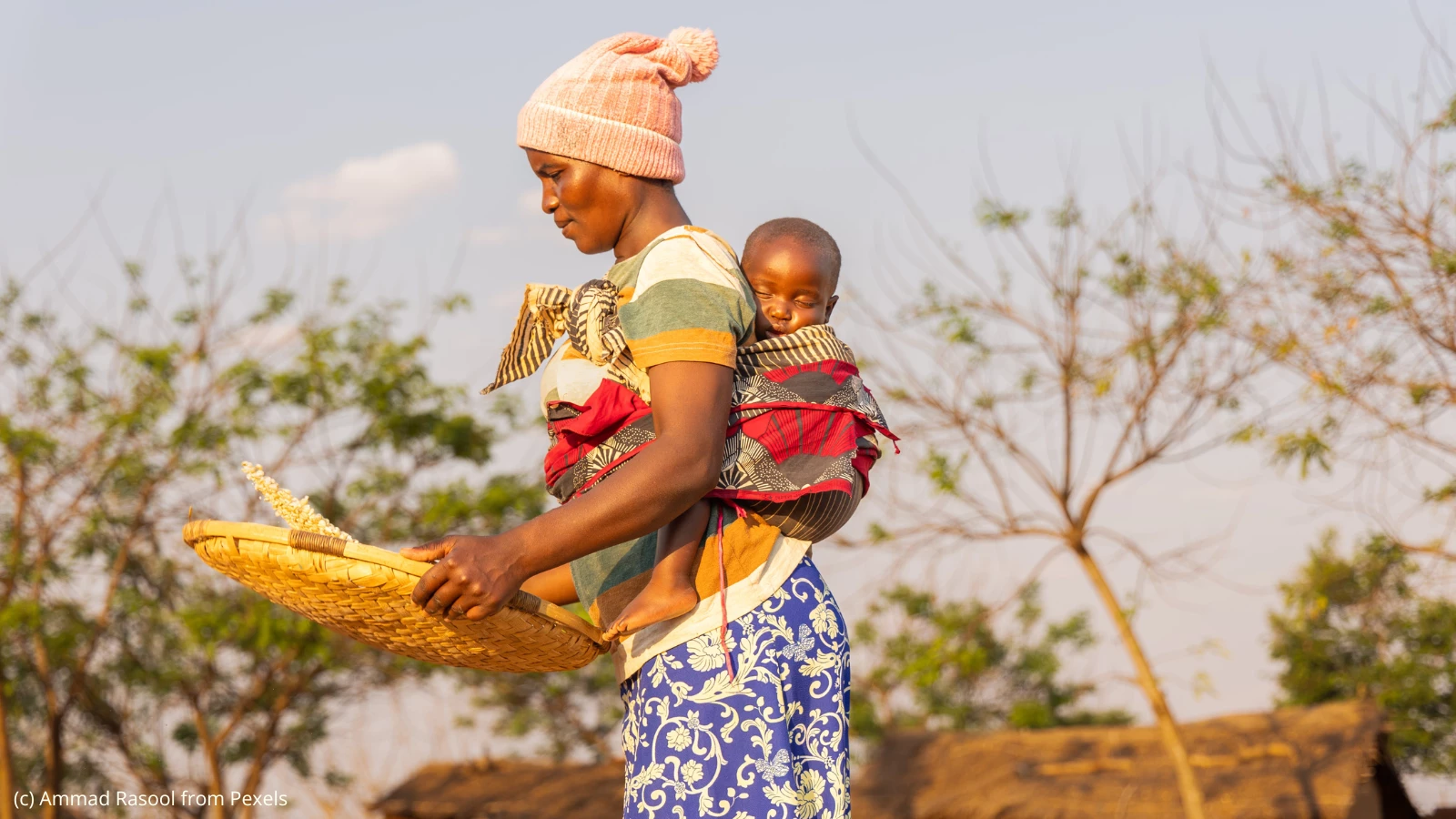
 Photo by Ammad Rasool from Pexels
In late 2023, Malawi faced a crisis, one that has continued to intensify. With annual inflation at around 28 percent, mounting fiscal deficits, and a shortage of foreign exchange, the country was unable to secure credit from international banks that was needed to import fertilizers, pharmaceuticals, and other essential goods.
Broad and difficult economic reforms, some supported through World Bank and International Monetary Fund programs, were and remain urgently needed. Even as the pace of reforms was uneven, it was imperative to maintain trade finance flows to ensure the country’s farmers and consumers were supported. This was especially true of Malawi’s exporters, concentrated in the agribusiness sector and heavily reliant on imported fertilizer.
So, the government turned to the World Bank for a form of guarantee financing that enables domestic banks to secure credit lines from foreign counterparts. The instrument—known as the Investment Project Financing with Deferred Drawdown Option (IPF DDO)—has made it possible for Malawi to keep buying imported goods even as its economic crisis deepens.
“In Malawi, we've seen how rapidly low foreign-exchange reserves can disrupt trade financing, which threatens the importation of essential commodities” said Firas Raad, World Bank Country Manager for Malawi, a landlocked nation of 21 million people in south central Africa. “This innovative use of an IPF DDO instrument demonstrates how we can help countries maintain financial flows in times of macroeconomic difficulties."
For the first time, the instrument was backed by a grant from the International Development Association (IDA), the branch of the World Bank that helps the poorest nations. Previously used only in more affluent economies such as Romania, it has since been deployed in other low-income countries, including Madagascar.
In Malawi’s case, the project promises to cover payments if local banks default on their obligations to international lenders. In this way, scarce IDA resources are being used strategically and temporarily to incentivize private-sector trade finance. The World Bank is cooperating closely with the International Finance Corporation, its private-sector arm, and the Reserve Bank of Malawi (RBM).
“This backstop helps restore international confirming banks' confidence in working with Malawi's local banks” said Alwaleed Fareed Alatabani, Practice Manager in the World Bank’s Finance, Competitiveness & Investment global department.
How it works
In Malawi, the guarantee is provided by the Reserve Bank of Malawi and wholly backstopped by the International Development Association (IDA). It works through a partnership of local issuing banks and international confirming banks.
The instrument has a multiplier effect: When local issuing banks settle their payments on matured letters of credit, the freed-up positions can be reused to backstop new letters of credit, potentially generating impact far beyond the initial allocation, which in Malawi’s case was US$60 million.
The amounts devoted to the instruments are taken out of the countries’ IDA and/or International Bank for Reconstruction and Development allocations. Importantly for any non-IDA grant recipient, it doesn’t add to a country’s debt unless the funds are drawn—a key consideration for many highly indebted low-income countries. At the end of the project, the IDA allocation is channeled back minus any drawdowns.
In October 2024, the instrument was used to fund the first transaction: US$1 million to import 1,500 metric tons of fertilizer. The timing could not have been better. The loan came just before the rainy season, when farmers plant crops such as corn and cassava. Since then, several more transactions, ranging from US$45,000 to $10 million, have covered imports of fertilizer and pharmaceuticals.
So far, five local lenders and three international confirming banks—which guarantee letters of credit issued by other banks—have signed up. “The project is the cornerstone of restoring international confidence in the stability of the banking sector in Malawi,” said RBM Governor MacDonald Mafuta Mwale. “It is especially critical since no Malawian bank has ever defaulted on its payment obligations, and despite that history we were not able to secure letters of credit, something this project helps us do,” he said.
Use of the instrument has since been extended to other southeast African countries, including Comoros and Mozambique, where it provides pre-arranged financing to create a swift, flexible, and sustainable mechanism for climate-disaster response.
"The IPF DDO has proven exceptionally versatile for developing economies," said Miguel Navarro, Manager of Financial Products & Client Solutions at World Bank Treasury. "It serves as an effective risk management tool capable of addressing a variety of financial challenges.”
Elsewhere, it has been used to backstop an energy stabilization fund to cover increased electricity generation costs from hydropower in Uruguay, allowing the utility to continue providing affordable electricity to households and industry under drought conditions. In Romania, it backstops a deposit -insurance guarantee fund to bolster confidence in the banking system. Given the nature of the instrument, it is accompanied by an underlying risk assessment to ensure that the chances of the product being drawn are mitigated to the extent possible.
As Albert Einstein said, “In the midst of every crisis lies a great opportunity.” While Malawi still faces inflationary pressures, fiscal strain, and scarce foreign exchange, the backstop is helping hold the line by sustaining imports, enabling exports, and rebuilding trust in banking relationships. This way, as the broader macroeconomic reforms are fully implemented, Malawi will have a foundation of exports to build on. The same structure can help other vulnerable countries unlock trade finance when it’s needed most.

Join the Conversation