
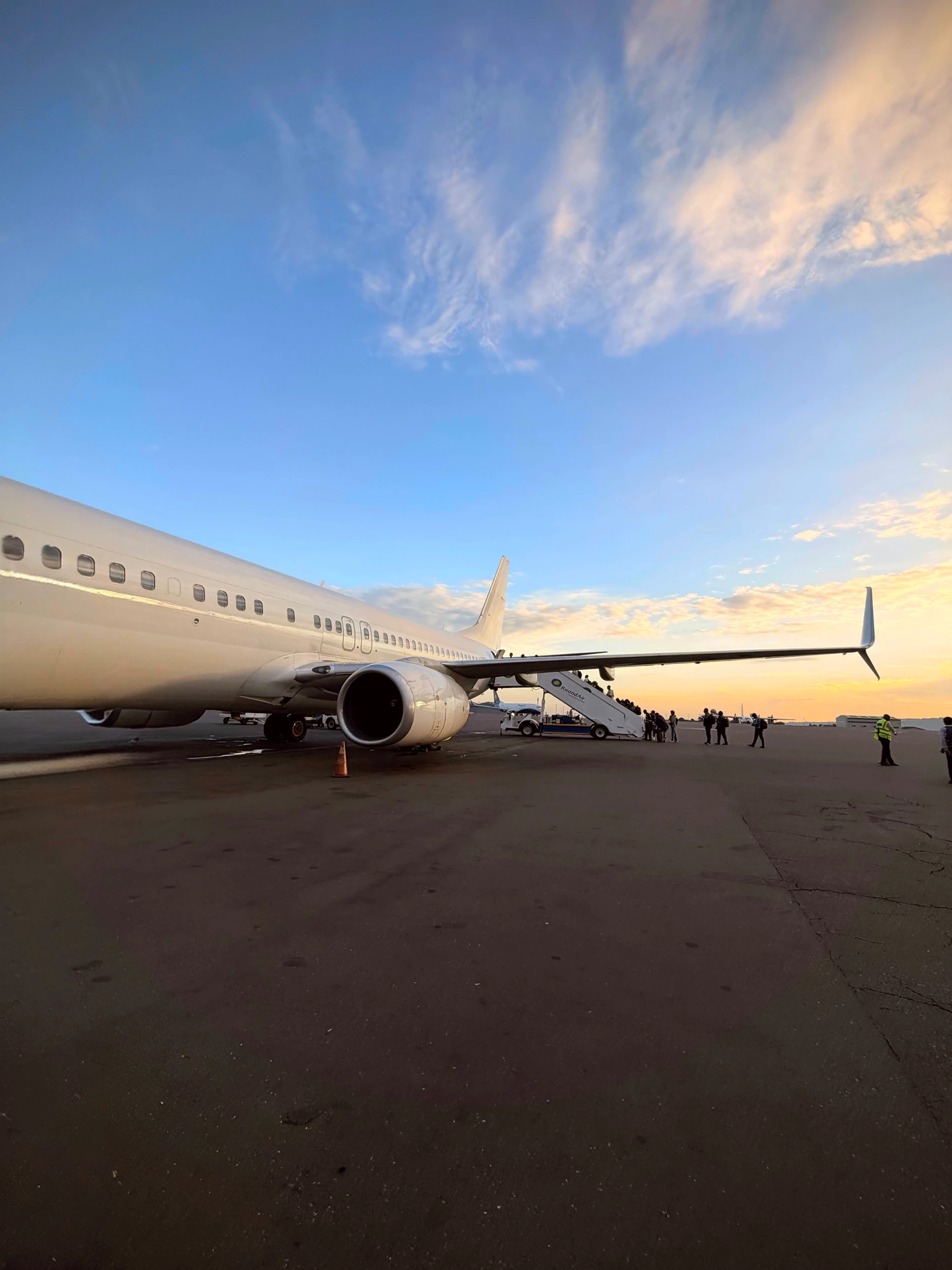
The International Civil Aviation Day is celebrated annually on 7 December in recognition of aviation’s important role in propelling global connectivity and economic growth. Aviation is unique among transport modes. It collapses distance and opens opportunities for landlocked countries, small island developing states, and remote regions where roads or ports are limited. Aviation is also integral to the job creation agenda. It is estimated to support 87 million jobs worldwide, comprising 12 million direct jobs in airports, airlines, aerospace and air navigation services, as well as 75 million other jobs in aviation supply chains and adjacent industries like fuel suppliers, tourism, and hospitality. More broadly, air transport is key to shared prosperity, as it supports US$ 4.1 trillion in global activities - almost 4% of global GDP.
Following this occasion, we take a moment to reflect on the World Bank Group’s journey in supporting countries to develop safe, secure, and sustainable aviation sectors through infrastructure and equipment investments, regulatory and policy strengthening, and analytical and advisory support. While the World Bank Group (WBG) has always financed a few aviation-related projects – its first loan, to France in 1947, included financing for Super Constellation aircraft – over the past two decades, the WBG’s aviation portfolio has expanded alongside development needs – from compliance with International Civil Aviation Organization (ICAO) standards, to infrastructure and institutional strengthening, to financial resilience and pandemic recovery, and now to resilience and sustainability.
Tracing Our Flight Log
The WBG’s earlier aviation engagements focused on helping countries meet ICAO standards for safety, security, and air navigation services, as the first step toward reliable international connectivity. The regional Air Transport Safety and Security Project supported civil aviation authorities and airports in Burkina Faso, Cameroon, Guinea, Mali and others to close critical ICAO findings. Working with the Agency for the Safety of Air Navigation in Africa and Madagascar (ASECNA), these efforts helped countries move toward ICAO audit compliance and raise international confidence. In the Pacific, the Pacific Islands Aviation Investment Program and technical assistance similarly helped strengthen the Pacific Aviation Safety Office (PASO) and national regulators across Samoa, Tonga, Kiribati, Tuvalu and Vanuatu in certification, regulatory inspections, and safety management.
Beyond compliance, the World Bank Group increasingly supported countries in modernizing aviation infrastructure and strengthening institutional capacity. The Transport Sector Support Project in Tanzania, co-financed with partners such as the European Investment Bank, upgraded runways, aprons and terminal facilities at regional airports including Kigoma, Bukoba and Tabora, while supporting improvements in airport management and operational efficiency.
The onset of the COVID-19 pandemic decimated air travel and exposed financial vulnerabilities across the aviation sector, prompting the WBG to help governments maintain essential connectivity and plan for recovery. In Southern Africa, a policy paper was produced to help the governments in Botswana, Eswatini, Lesotho, Namibia and South Africa assess fiscal risks, airline and airport balance sheets, and options for restructuring and business continuity, laying the groundwork for more financially resilient aviation systems in the wake of the pandemic.
As climate risks intensify, the Bank has supported countries in enhancing resilience while improving the sustainability of their aviation sectors. The Caribbean Regional Air Transport Connectivity Projects supported Haiti, Saint Lucia, Grenada, and Dominica with flood resilience through runway rehabilitation as well as improvements in airfield drainage, navigation, and safety equipment. The WBG also produced important analytical work identifying the policy and investment pathways for lower-income countries to adopt Sustainable Aviation Fuels (SAF) to decarbonize air transport, as well as the potential for African countries like Ethiopia, Kenya, Nigeria and South Africa to produce SAF competitively.
Expanding the World Bank Group's aviation portfolio

Cleared for the Climb
Global passenger and cargo air traffic are projected to more than double in the next two decades. ICAO’s Strategic Plan 2026-2050 anchors this outlook around three long-term aspirations: zero fatalities, net-zero carbon emissions by 2050, and inclusive access to air transport. These serve as usual guideposts for where the Bank may continue supporting developing countries in the aviation sector.
Aviation’s future will be defined by people as much as by infrastructure. Industry forecasts show the need for more than 660,000 new pilots, 710,000 technicians, and 1,000,000 cabin crew globally in the next two decades – with the largest gaps expected in developing regions where training pipelines remain limited. Regulators and operators also contend with rapid technological advancements across air navigation services, drone and electric vertical take-off and landing (eVTOL) applications, SAF value chains, hydrogen fuel, and others. This represents a space where the World Bank Group can support developing countries in human capital and institutional capacity to ensure shared benefits from aviation.

The financial and governance underpinnings of aviation will be equally critical. The sector faces high capital costs, thin margins, long payback horizons, political economy dynamics, and foreign exchange risks, among others. These challenges call for integrated public–private solutions. Through the International Development Association (IDA) and the International Bank for Reconstruction and Development (IBRD), the World Bank Group can support policy, regulation, and resilient infrastructure; IFC brings expertise in structuring and financing private participation in aviation projects; and the Multilateral Investment Guarantee Agency (MIGA) helps mitigate political and counterparty risks. Together, the World Bank Group is uniquely positioned to help countries build aviation systems that are financially viable, well governed, and capable of delivering long-term development impact.


Join the Conversation