
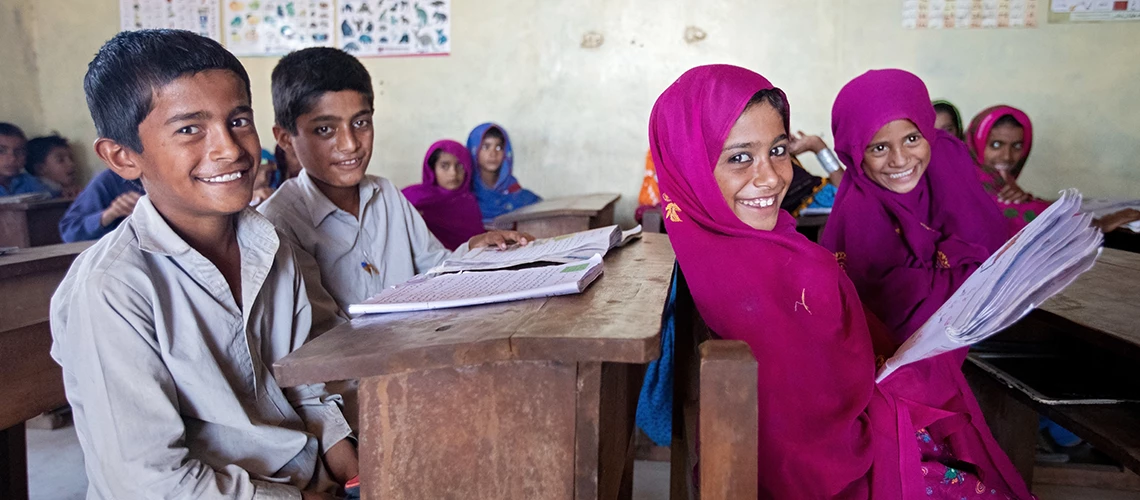
 Copyright: IFC
Across the world, progress in development has slowed. Yet some countries have found ways to make remarkable gains.
Consider the examples of Rwanda, the Kyrgyz Republic, Cambodia, and Ethiopia. Each shows that development gains remain possible when governments focus on practical reforms, invest in infrastructure, and build institutions that can deliver results. Their experiences are a reminder that while the global picture is troubling, stagnation is far from inevitable.
At the broadest level, the picture is sobering. For most of the past 75 years, the arc of development bent upward: poverty fell, life expectancy rose, more children went to school, and access to essential services expanded. Today, that momentum has weakened sharply. The World Bank Group’s latest Atlas of Global Development shows that, on average, countries are progressing at their slowest pace since 1950.
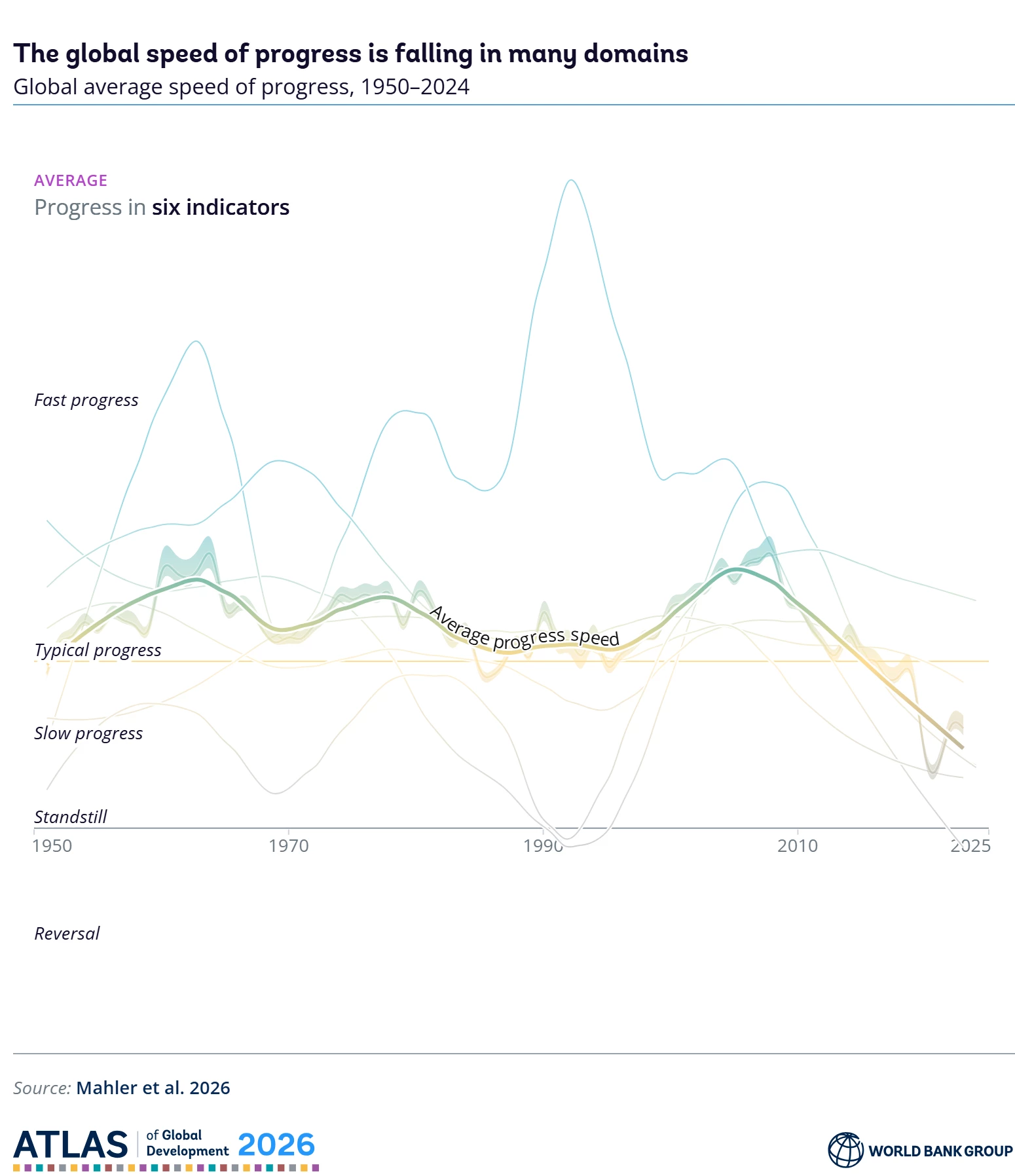
This slowdown is visible across many of the measures that matter most for human well-being: poverty reduction, health, schooling, infrastructure, and incomes. If current trends persist, more than 50 developing economies could take a century or more just to reach the development levels seen in high-income countries. That should trouble us all—because slower development means that hundreds of millions of people will have to wait decades longer for the things that prosperity brings: better jobs, better schools, better health care, and higher living standards.
It is tempting to attribute the slowdown entirely to recent shocks such as pandemic aftershocks, climate disasters, debt distress, and conflict. Those pressures are real. But the troubling truth is that the slowdown began before the pandemic. This is not simply a story of crisis. It is also a story of weak productivity growth, insufficient investment, fragile institutions, and policy frameworks that have too often favored short-term firefighting over long-term transformation.
This is precisely why the World Bank Group is building the Knowledge Bank. Our role is not only to finance development, but to shorten the distance between evidence and implementation—to help countries identify proven approaches, adapt them to local circumstances, and scale them more quickly.
What Successful Countries Have in Common
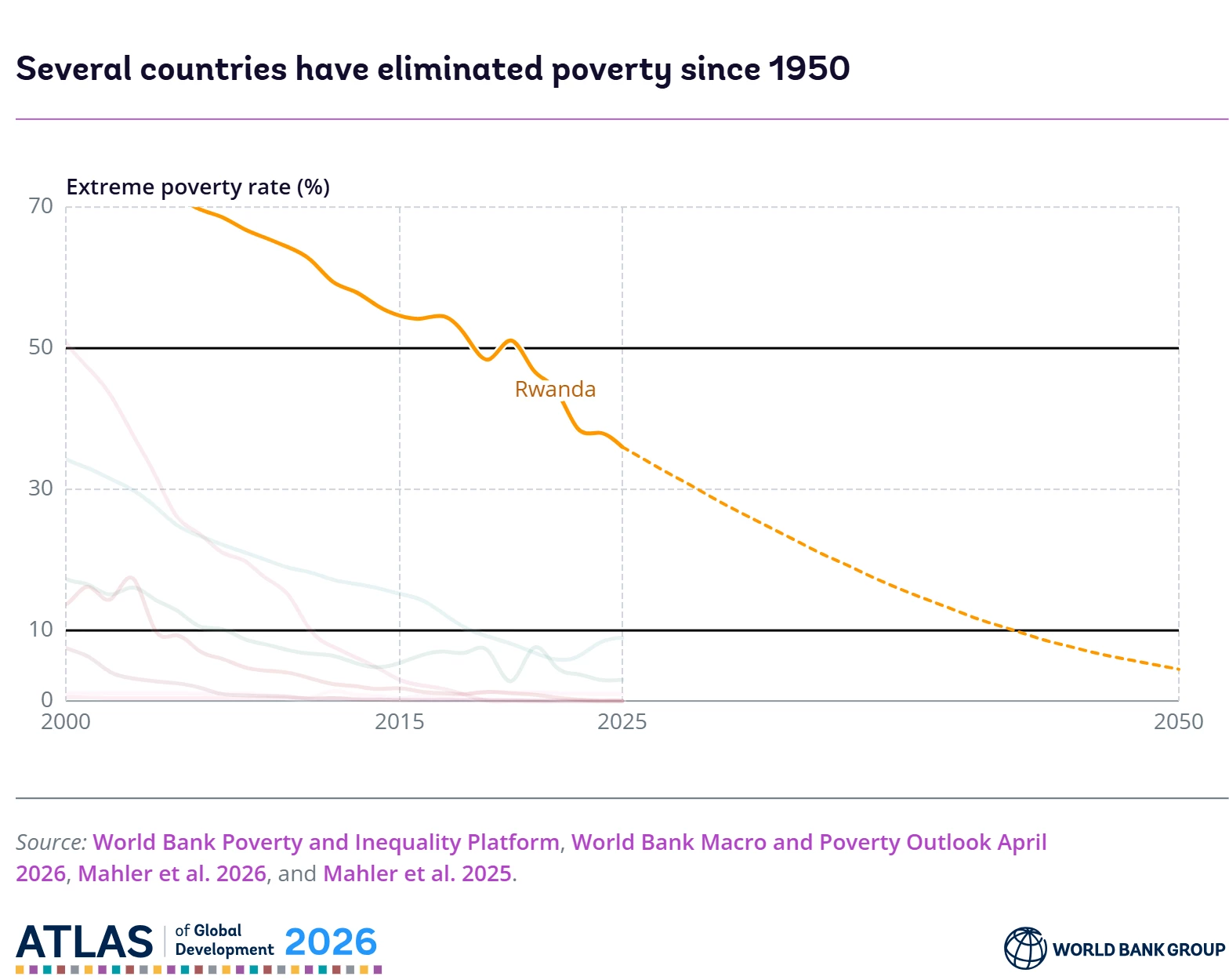
Consider Rwanda. In the aftermath of the 1994 genocide, few would have predicted the scale of the country’s recovery. Yet Rwanda reduced extreme poverty from about 90 percent to less than 40 percent, and if it sustains this pace, it could bring extreme poverty below 10 percent by 2050. That achievement did not happen by accident. Rwanda combined sustained economic growth with a capable state, large-scale public investment, and a structural shift of labor toward higher-productivity activities, especially in services such as trade, tourism, transport, and conferences. Rwanda's experience reminds us that growth alone is not enough. Lasting progress depends on institutions that can implement reforms consistently over time.
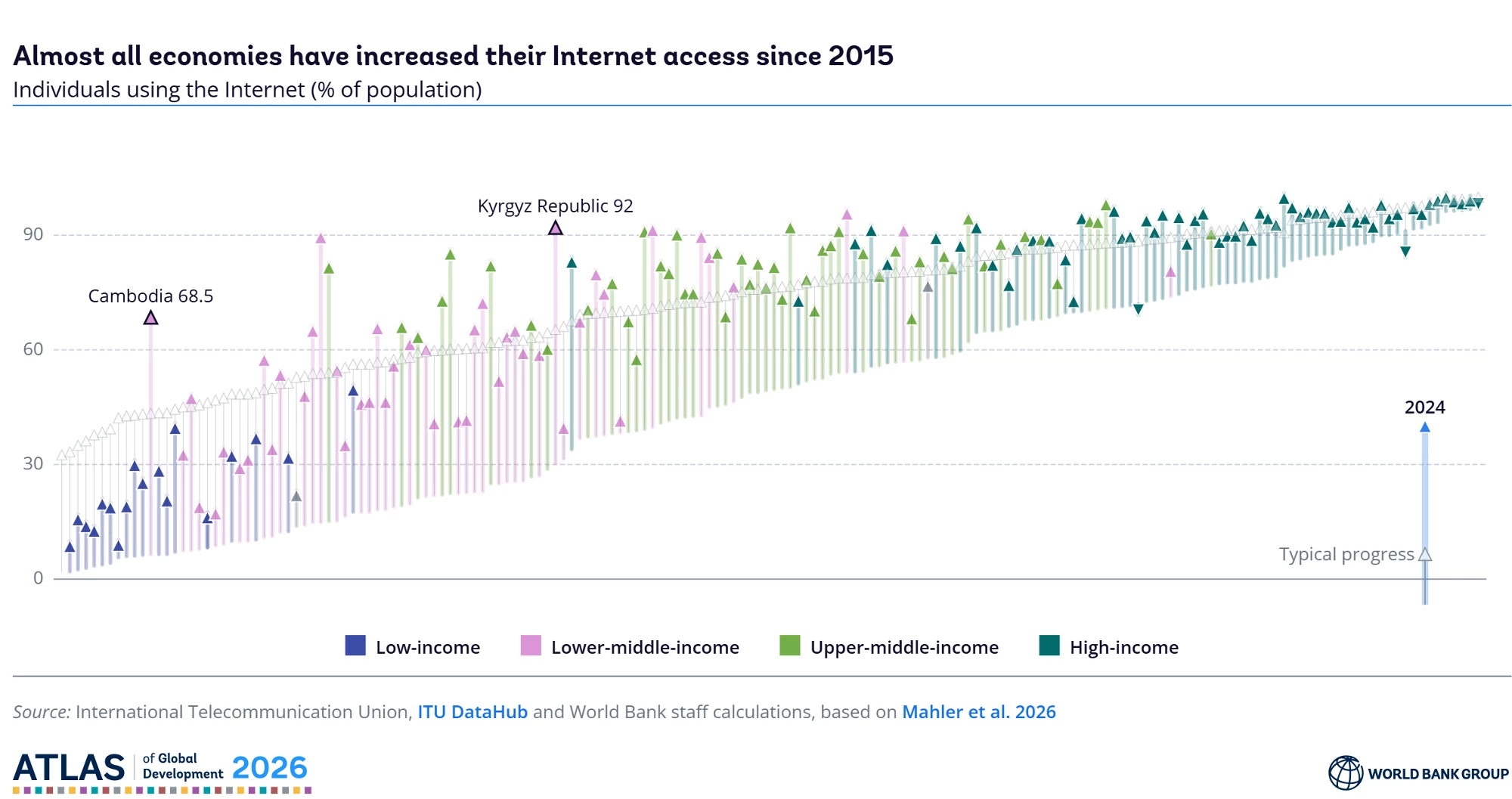
Digital infrastructure is becoming as fundamental to development as roads or electricity. Cambodia and the Kyrgyz Republic show that there is more than one path to achieving it. In the Kyrgyz Republic, internet access rose from roughly 30 percent in 2015 to more than 90 percent in 2024. Cambodia recorded an even more dramatic jump, from just 7 percent to around 70 percent. Their strategies were different, but both were effective. The Kyrgyz Republic expanded physical infrastructure, laying fiber-optic cables across underserved areas and strengthening cross-border connections. Cambodia relied more heavily on a market-driven model, with rapid mobile phone adoption and strong private investment allowing it to leapfrog traditional fixed-line systems and move directly into mobile broadband. In both cases, connectivity expanded because policy and investment aligned around a clear national objective: bringing people into the digital economy quickly and at scale.
Ethiopia advanced by expanding energy access. In 2012, the national grid reached only a small share of rural communities. Over the past decade, however, electricity access has expanded rapidly, and nearly half of the rural population now has access. Crucially, Ethiopia did not rely on a single model. It extended the national grid where that was feasible, while also deploying off-grid solar home systems and mini-grids in remote areas. About three-quarters of rural households gaining access have done so through solar power. Ethiopia demonstrates that progress comes from choosing practical solutions that fit local realities rather than waiting for a single perfect model.
Lesson for Development Policy
These examples show that development knowledge is built from reforms that have been tested, adapted, and shown to work.
The challenge is to ensure those lessons travel further.
When one country finds a better way to expand electricity access, strengthen digital infrastructure, or improve public services, others should be able to build on that experience rather than starting from scratch.
These stories also rebut the idea that progress in development is impossible today. They show that progress occurs when countries focus on the basics: reliable infrastructure, openness to innovation, institutions that can implement, and policies that help labor and capital move into more productive uses. They also show that there is no single formula. Rwanda’s gains came through broad-based growth and structural change; the Kyrgyz Republic and Cambodia moved through digital connectivity; Ethiopia advanced through pragmatic energy solutions tailored to rural realities. Different starting points require different strategies, but all of them underscore the importance of execution.
For policymakers, the message is clear. The world cannot afford to accept a future in which countries need 100 or 150 years to close even part of the development gap with advanced economies. That means prioritizing investments that raise productivity, expanding access to power and digital infrastructure, strengthening the capacity of the state, and creating credible conditions for private investment and job creation.
We need big bets that deliver visible progress. Mission 300, which aims to connect 300 million people in Sub-Saharan Africa to electricity by 2030, is a model of the scale required. Combined with digital connectivity, better public services, and stronger institutions, these investments can dramatically accelerate progress.
Around the world, countries are proving that progress is still possible. Our responsibility is to ensure those lessons do not remain isolated successes. Through the Knowledge Bank, we have an opportunity to connect countries with proven solutions so that development creates more opportunities.
In the end, knowledge matters most when it improves lives.

Join the Conversation