
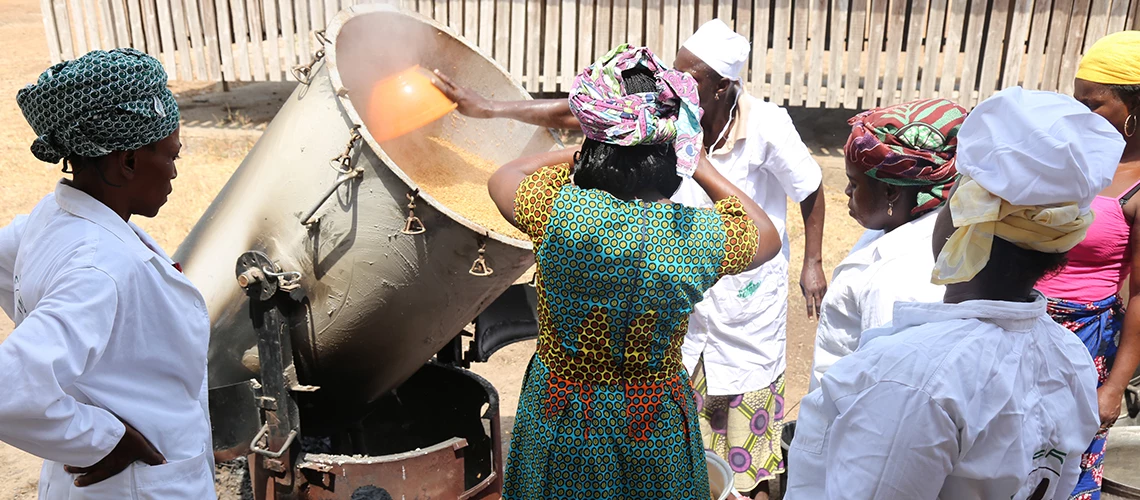
 Boiled rice producer in center Benin. Credit: Gnona Afangbedji / World Bank.
For many years, farming in Benin supported communities with food and employment but faced major obstacles. Farmers often lacked good seeds, fertilizers, and irrigation systems, leading to low crop yields. The country relied heavily on a few crops—cotton, pineapple, cashew, and soybean—and was highly susceptible to floods and climate-related problems. Most of the harvest was sold unprocessed, so local communities missed chances for extra income and jobs that come from processing and adding value to their produce.
In 2010, severe floods swept through 55 out of Benin’s 77 communes, causing widespread destruction. The disaster ruined food supplies, seeds, and livestock, and wiped out roughly 40% of local harvests. Many farming families faced a dire situation, with both their livelihoods and access to food at risk.
Significant support provided for farmer recovery
In 2011, to help communities bounce back, the Government of Benin with support from the World Bank, launched the Agricultural Productivity and Diversification Project (PADA). The main objective was to enable farmers to rebound swiftly and develop a more resilient and diverse agricultural sector for the future.
What changed on the ground?
In the aftermath of the devastating floods, farmers in Benin received immediate and crucial assistance to help them restart production. They were provided with essential farm inputs, such as seeds and fertilizers to replant their fields, as well as poultry kits, vaccines, fingerlings, and fish feed to revive both livestock and aquaculture. These resources ensured that farming families had everything necessary to quickly get back on their feet and resume food production and restore their incomes.
 Credit: Gnona Afangbedji / World Bank.
Beyond these emergency supplies, significant investments were made in improving water management for irrigation and farming equipment. New irrigation infrastructure and upgraded fish-farming facilities helped an impressive 215,510 farmers affected by the floods to restore their livelihoods and become more resilient to future climate shocks.
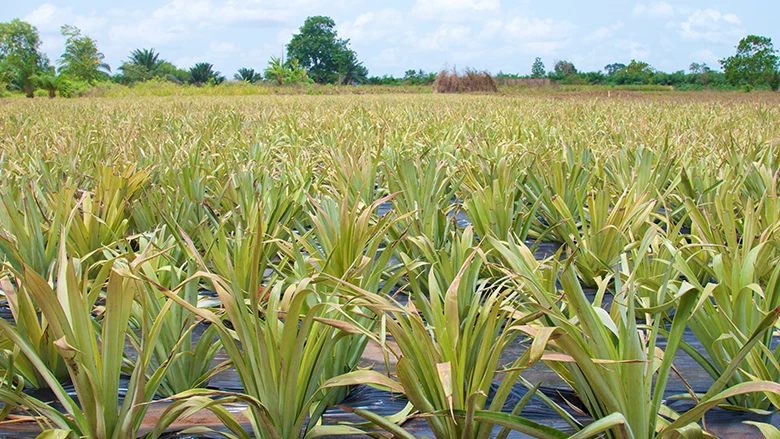
With improved practices and modern tools, farmers saw significant increases in crop yields. Harvests of major crops—such as cashew, maize, rice, and pineapple—doubled, providing communities not only with more food but also surplus to sell.
The PADA project positively impacted both livestock and aquaculture sectors. The implementation of enhanced breeds, expansion of vaccination initiatives, and improvements in shelter infrastructure resulted in a greater than 50% increase in poultry output. Concurrently, fish farmers surpassed their production targets, thereby contributing to increased availability of affordable protein and improved nutritional outcomes for agricultural producers and surrounding communities.
Adding value and improving markets
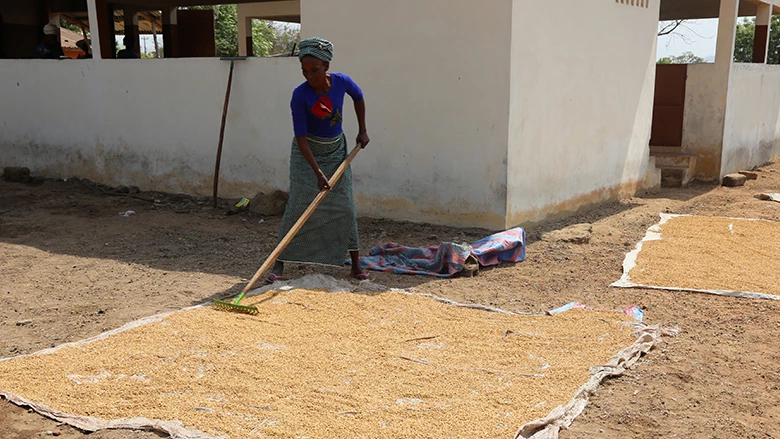
The project facilitated the development of small-scale processing centers and storage facilities, enabling farmers to dry, store, and process crops such as rice with increased efficiency. Additionally, training initiatives equipped producers to achieve quality standards and access new markets. Consequently, there was a significant increase in cashew and pineapple exports, generating higher incomes for rural communities.
Supporting women’s empowerment and strengthening institutions was one of the project’s major successes. Women accounted for over 40% of the beneficiaries and received 47% of the matching grants for processing activities provided by the project. Additionally, the initiative encouraged the formation of professional farmer organizations and reformed several key departments within the Ministry of Agriculture, leading to enhanced coordination across the sector, better implementation of work programs, and improved governance.
These advances had clear effects throughout the country. An evaluation of the PADA project found that it contributed roughly 3% to Benin’s GDP in 2020, highlighting the wide-reaching value of investing in agriculture.
 Credit: Gnona Afangbedji / World Bank.
What we learned
Enhancing the delivery of seeds and equipment to farmers requires effective partnerships with businesses. Strengthening local research ensures that agricultural solutions are appropriately adapted to Benin’s climate and specific requirements. Promoting collaboration between public and private entities across the entire value chain—from input provision through processing to export—can maximize outcomes. Additionally, supporting farmer groups and local institutions is essential, as this contributes to sustainable benefits extending beyond the duration of individual projects.
Progress achieved through PADA has laid the foundation for new initiatives, such as the ongoing Agricultural Competitiveness and Export Diversification Project (PACOFIDE). This program aims to enhance the competitiveness of Benin’s agricultural sector, diversify crop production, and increase both local processing and exports. These efforts are expected to generate employment opportunities, improve food security, and strengthen the resilience of Benin’s food system.



Join the Conversation