
 Satellite technology and ground-based agricultural surveys are reshaping how countries monitor crops, manage risks, and plan for food security. / Photo: Shutterstock
Have you ever wondered how satellites orbiting thousands of kilometers above Earth can help farmers on the ground grow more food? From mapping land use and tracking crop growth to predicting climate impacts and farm productivity, technologies that leverage Earth Observation (EO) data are of great support to development efforts and provide unprecedented opportunities to improve food security, resilience, and sustainability. These were just some of the challenges explored at the recent “Spaceborne EO Technology for Agricultural Data Workshop,” held at the European Space Agency (ESA) in Frascati, Italy.
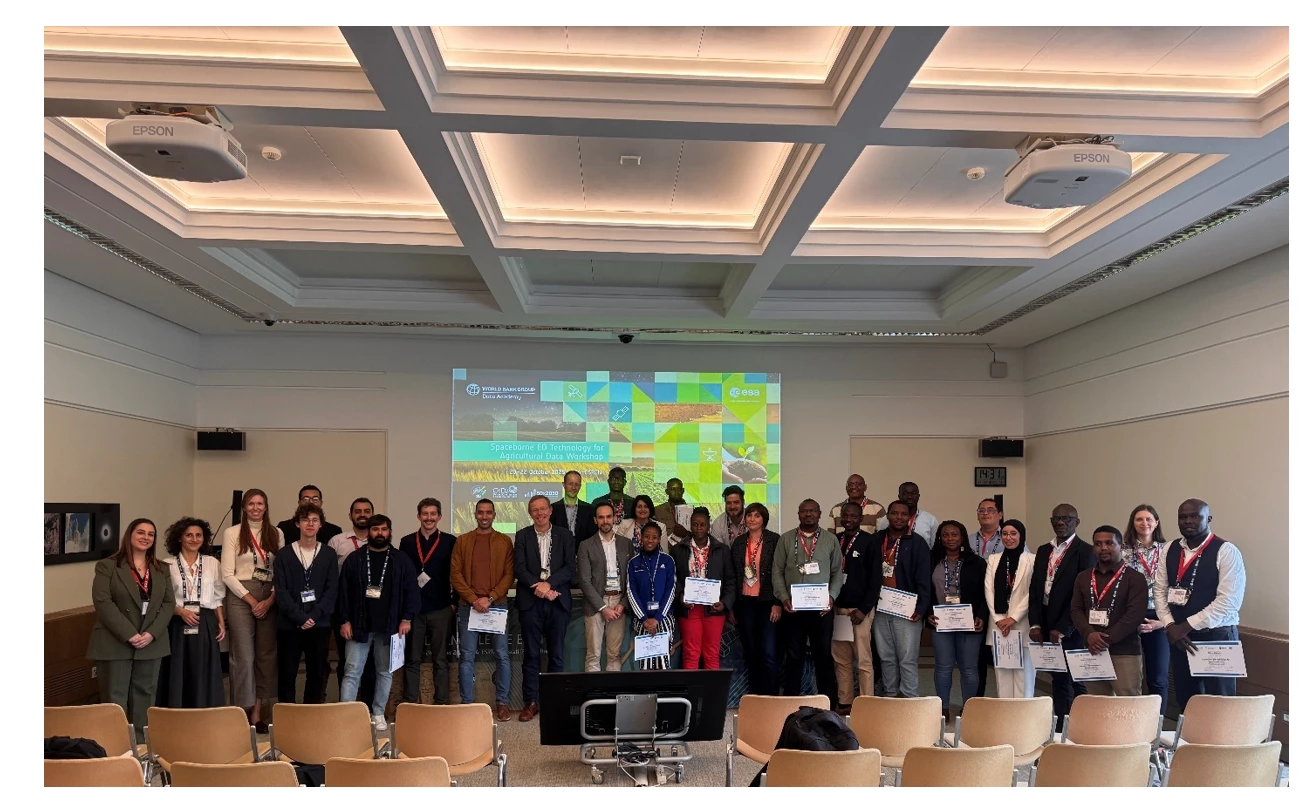 “Spaceborne EO Technology for Agricultural Data Workshop”, Certificates’ Ceremony, 22 October 2025, Frascati (Italy).
Over three days, 24 participants — from leading global and national institutions — representing 12 countries across three regions in Africa discussed how satellite data and innovations in geospatial technology are being applied in agriculture. This diverse group of professionals brought a wealth of experience and perspectives, united by a shared mission: harnessing EO and in situ agricultural data to drive sustainable development in Africa. They focused especially on the challenges that remain for scaling up these solutions and how to ensure that these technologies directly benefit farmers and policymakers. The event was co-organized by the World Bank Group Data Academy, the Center for Development Data, the 50X20230 Initiative, and the European Space Agency (ESA) through its Global Development Assistance programme.
Why is integrating EO technology with in situ agricultural survey data so transformative for agriculture?
Imagine being able to monitor crops, forecast droughts, and plan interventions — all from space. That’s the promise of this technology, which enables the combination of satellite imagery with ground-level survey data for a comprehensive, real-time view of what’s happening in the fields. For Africa, for instance, where agriculture is the backbone of economies and livelihoods, this integration is a game-changer: it means increased productivity, greater food security, and more job opportunities, especially for youth and people in rural communities. The participation of staff from Rome-based international institutions (trainees included experts from the Food and Agriculture Organization [FAO], as well as the International Fund for Agricultural Development [IFAD]) into the workshop underscored the relevance of these efforts not just for Africa, but as a model for other regions.
The ESA Global Development Assistance (GDA) program took center stage, demonstrating how satellite EO data can accelerate and amplify development impact in international operations. In this context, two key ESA initiatives aimed at empowering development stakeholders and countries in leveraging EO for agriculture were presented: the WorldCereal and Sen4Stat projects. WorldCereal focuses on developing an open-source, cloud-based system for local to global crop monitoring at the field scale. Having timely access to accurate crop type maps is an essential prerequisite for many downstream agricultural monitoring applications. As such, WorldCereal allows anyone to generate fully customized crop type maps tuned for their area, season and crop types of interest, leveraging EO data from the Copernicus Sentinel missions.
On the other hand, Sen4Stat is specifically designed at helping National Statistical Offices (NSOs) integrate EO data into their agricultural statistics workflows. Its goal is to improve the accuracy, timeliness, and policy relevance of agricultural data by demonstrating and co-developing EO-based products, as well as best practices for survey protocol. In summary, while WorldCereal aims to increase accessibility to innovative and operational EO-based crop type mapping tools for the wider agricultural monitoring community, Sen4Stat is tailored to help governments and statistical offices improve their data collection and reporting using EO technology.
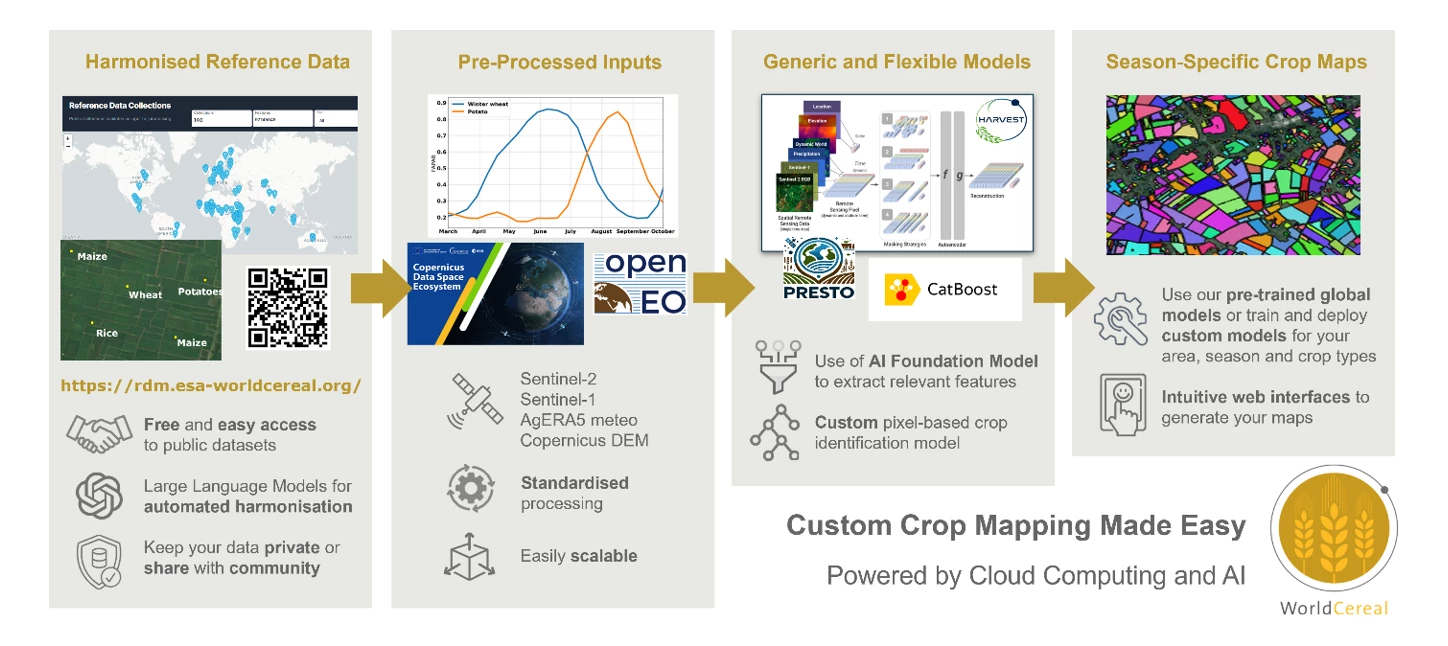 Main components of the WorldCereal crop mapping system.
Learn more about our products and services: https://esa-worldcereal.org/en/worldcereal-products.
.) Sen4Stat approach and key impacts on agricultural statistics.
Sen4Stat approach and key impacts on agricultural statistics.
Central to the workshop was the complementarity between EO data and ground data, in particular through initiatives like 50x2030, which is building integrated, fit-for-purpose, and financially sustainable agricultural and rural survey programs tailored to country needs. By weaving EO technology into these programs, this initiative is fostering a culture of data-driven decision-making in agriculture to improve not only the quality and relevance of agricultural data but also ensuring it is effectively used for policy and operational decisions.
The Methods & Tools Development component of 50X2030 is key. It generates knowledge to enhance the quality, relevance, and cost-effectiveness of agricultural and rural survey data, with a strong focus on enabling and optimizing integration with geospatial data. By adding value to survey data and producing operational guidelines based on rigorous methodological research, 50x2030 is paving the way for mainstreaming validated methods into future surveys — even beyond the scope of the initiative itself. In summary, the integration of EO technology with in situ survey data is revolutionizing agricultural monitoring and decision making. Through strong partnerships, innovative methods, and a focus on capacity building, initiatives like 50x2030 are helping countries harness the full potential of data to drive sustainable agricultural development.
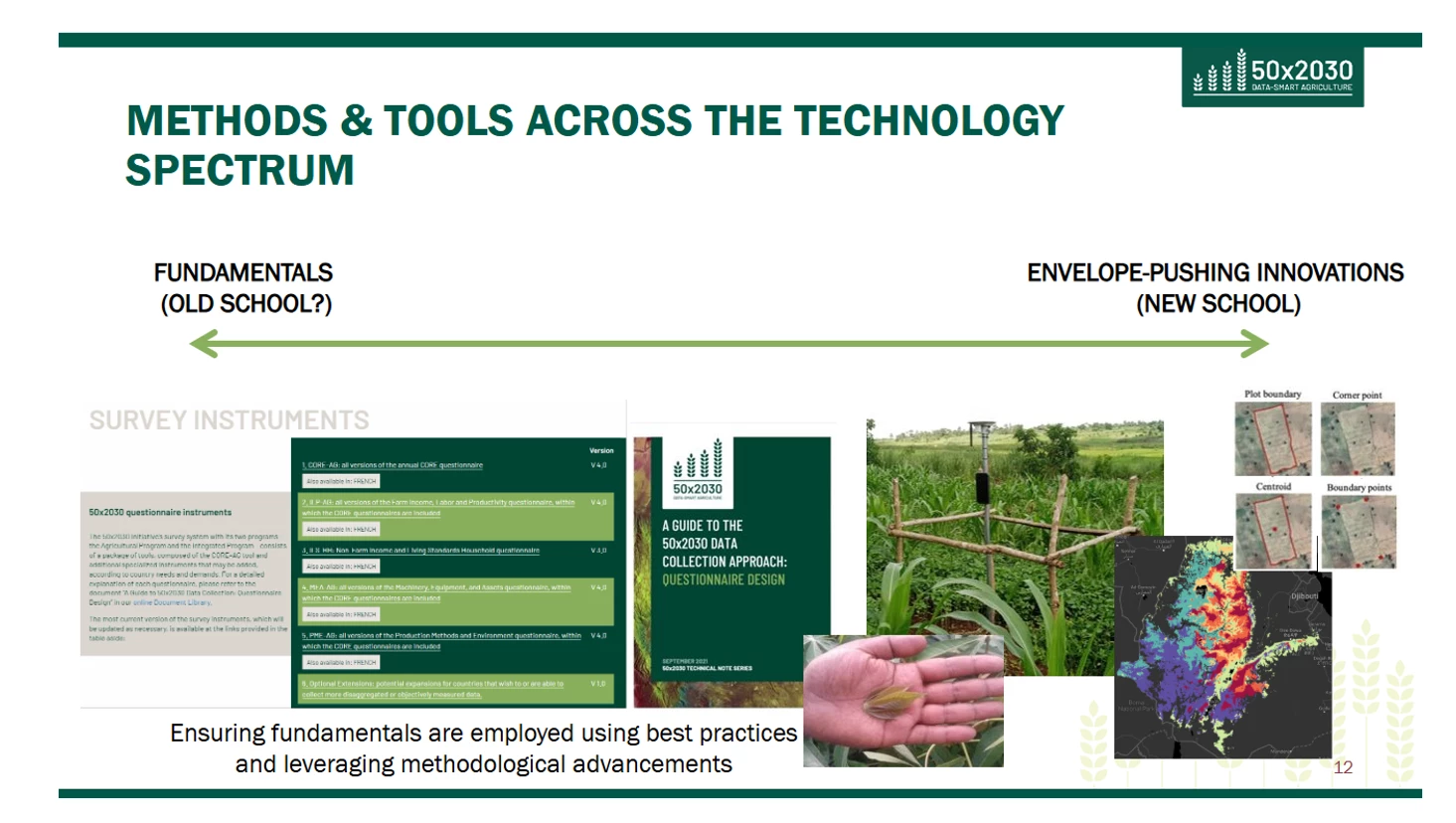 The 50X2030 Initiative: Integrating Agricultural Surveys & EO.
From building skills to generating a wider impact
The workshop itself was designed to maximize practical impact. By combining hands-on sessions with theoretical foundations, participants gained real-world skills in using EO tools and applying them in their daily work at national statistical offices and international agencies. This approach laid the groundwork for a “train the trainers” model, enabling participants to replicate and scale up these skills in different countries around the world. A survey conducted before and after the workshop shows that:
- Participants reported a 40% increase in their knowledge of the topic.
- 84% of participants anticipate improvement in their job performance because of what they learned.
- The vast majority (4.6 out of 5) of participants would recommend the program to peers.
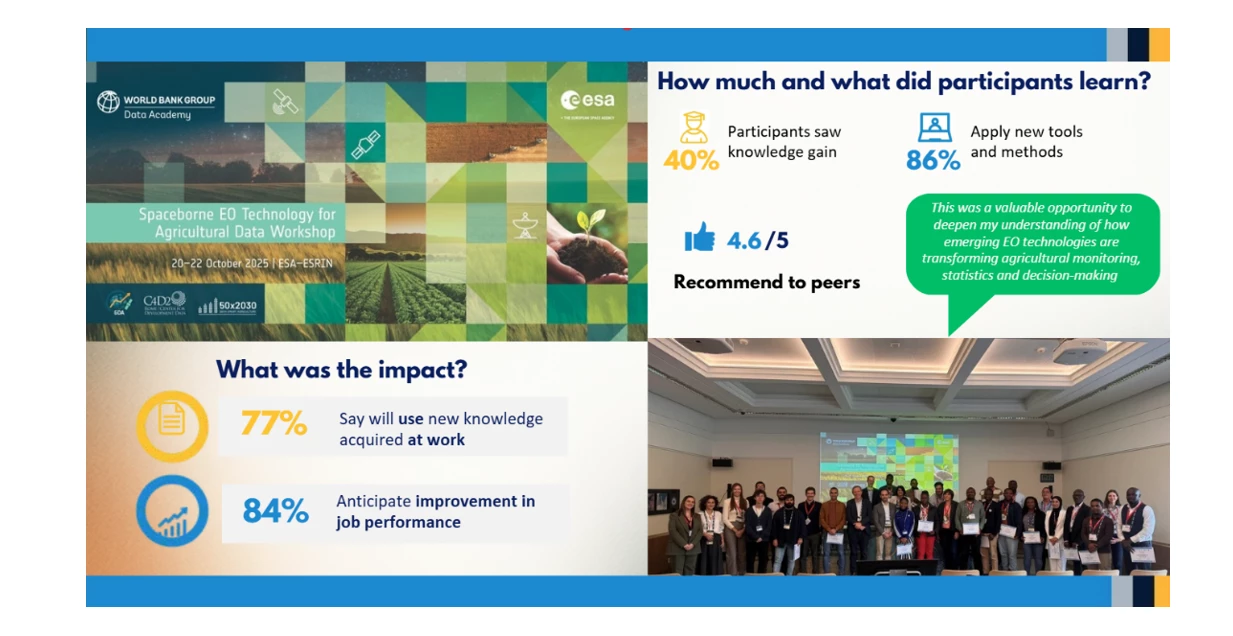 Impact Assessment Results on the Workshops’ Knowledge Gains.
While significant progress has been made, persistent challenges remain in ensuring that in-situ data for EO-based agricultural monitoring is both high-quality and truly fit-for-purpose — requiring harmonized guidelines for data collection — and that this valuable data is accessible and widely shared within the community, as limited accessibility continues to hamper the quality and impact of EO-based products. The “Spaceborne EO Technology for Agricultural Data Workshop” directly tackled these issues by empowering participants with practical skills, fostering knowledge exchange, and building a network of experts committed to improving data standards and sharing practices. Through hands-on training and collaborative problem-solving, the workshop equipped agricultural advisors and practitioners to integrate EO and ground data more effectively into their daily work, paving the way for innovative solutions, better decision making, and greater impact where it matters most.
Far more than just another event, the workshop served as a launchpad for new ideas, partnerships, and progress — demonstrating that with continued collaboration and capacity building, the future of agriculture can be high-tech, data-driven, and inclusive, with some help from outer space.




Join the Conversation